
Compression Garments

At a glance
Used after | Liposuction, tummy tuck, body contouring, arm lift, thigh lift and selected facial procedures |
Purpose | Supports healing tissues and helps manage post-operative swelling |
Helps with | Tissue support, comfort, contour development and fluid management |
Typical wear time | Varies according to surgery and recovery stage |
Replacement garments | Sometimes required as swelling decreases |
Prescription | Individualised according to the procedure and surgeon’s recommendations |
Recovery after plastic surgery does not end when the procedure is completed. While surgery creates the intended structural changes, the body continues healing for weeks and months afterwards as swelling settles, tissues adapt and contours gradually mature. One of the most commonly prescribed components of post-operative care is the compression garment.
Although patients often focus on the procedure itself, compression garments play an important role during recovery. They are frequently recommended following body contouring procedures, liposuction, abdominoplasty and other surgeries where swelling and tissue healing are expected parts of the recovery process.
What are compression garments?
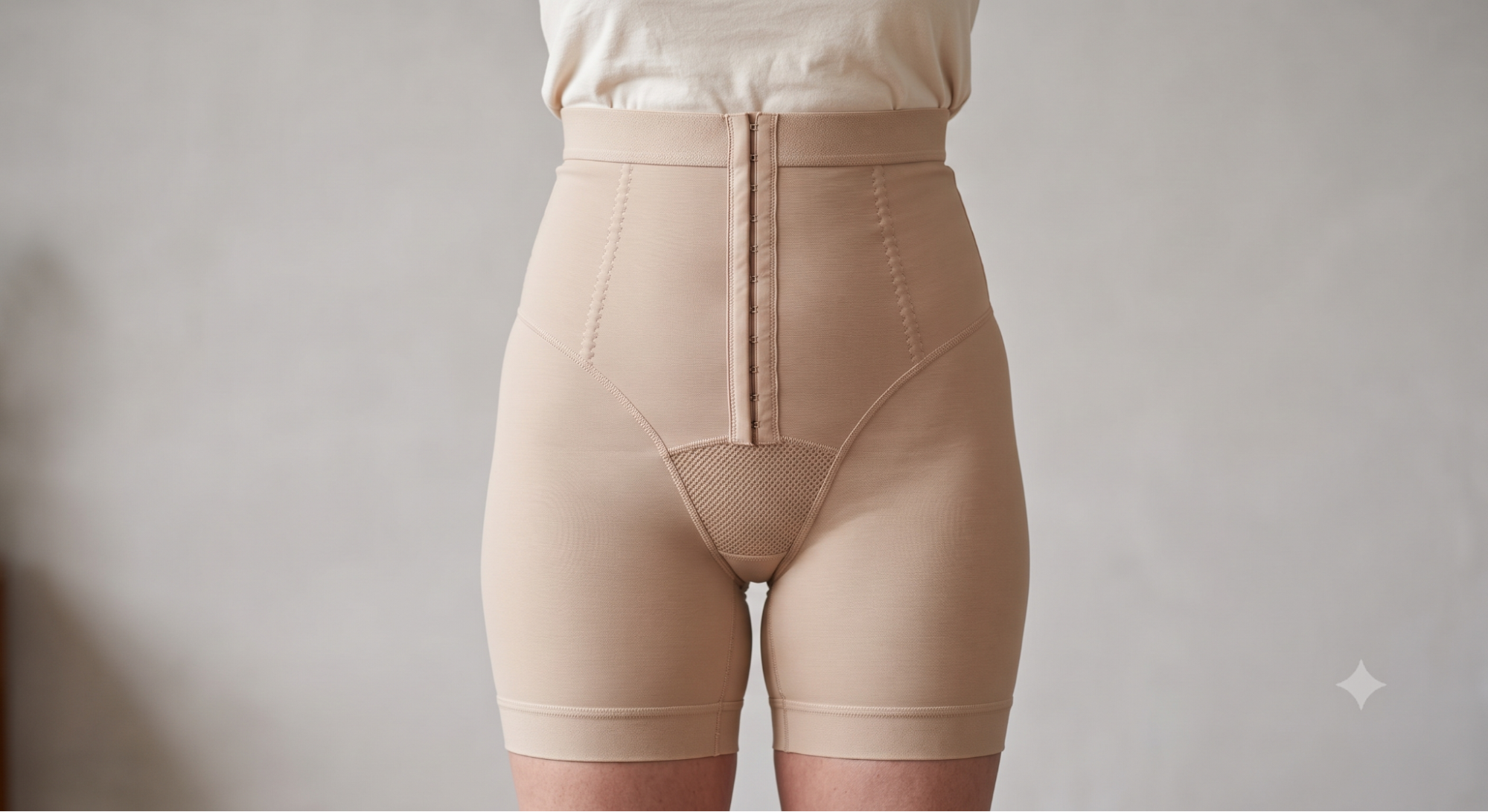
Compression garments are specially designed medical-grade garments that apply controlled, consistent pressure to specific areas of the body during recovery.
Unlike ordinary shapewear or tight clothing, post-surgical compression garments are designed to deliver graduated support while accommodating the body’s healing processes.
Depending on the procedure performed, compression garments may be worn around the:
- Abdomen
- Waist
- Flanks
- Thighs
- Arms
- Chest
- Face and neck
- Multiple treatment areas simultaneously
The garment prescribed depends on the surgical procedure, treatment area and stage of recovery.
Why are compression garments used after surgery?
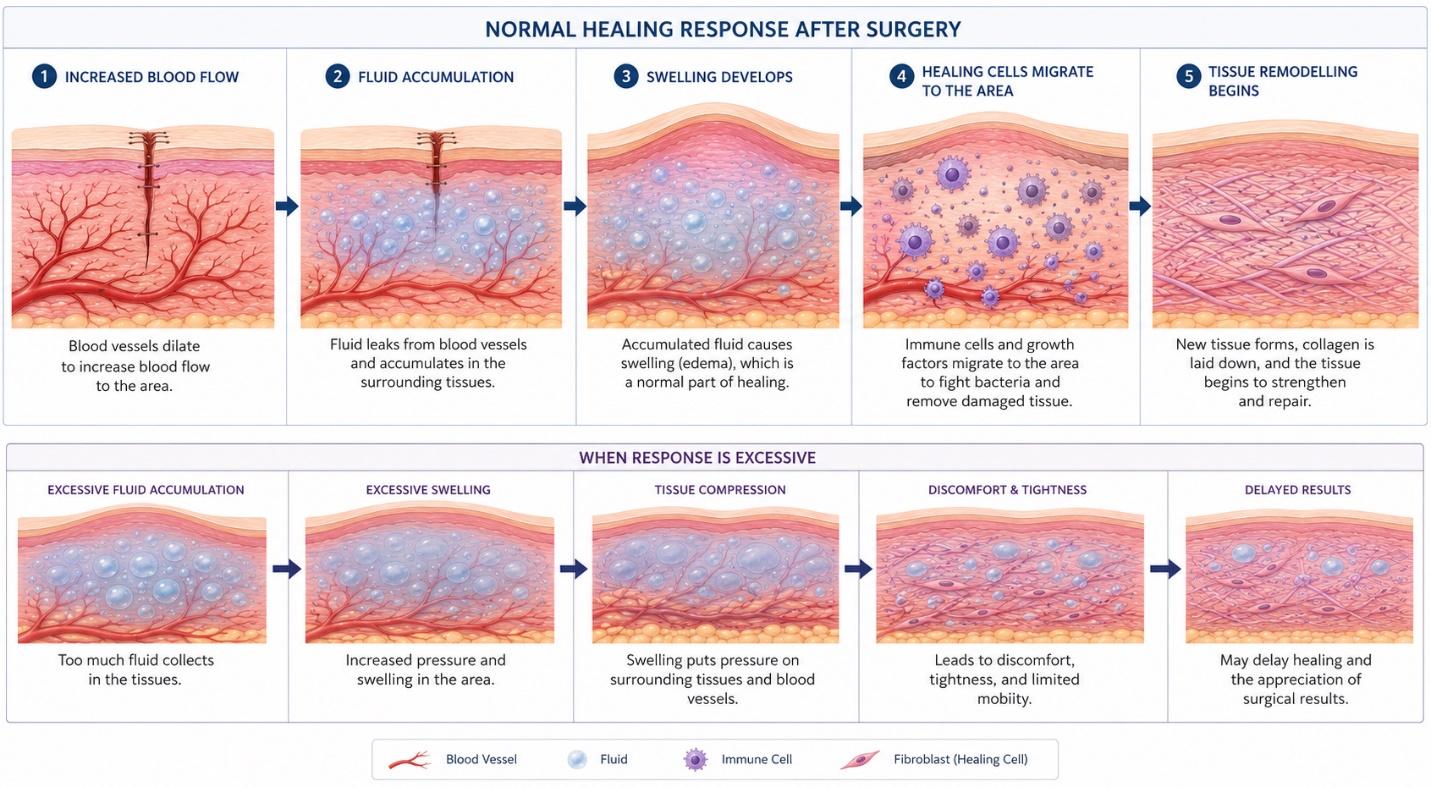
To understand why compression garments are commonly prescribed, it helps to understand what happens after surgery.
The body naturally responds to surgery by initiating inflammation and tissue repair. During this process:
- Blood flow increases
- Fluid accumulates within tissues
- Swelling develops
- Healing cells migrate to the area
- Tissue remodelling begins
These responses are normal and necessary for recovery.
However, excessive swelling and fluid accumulation may contribute to discomfort, tightness and delayed appreciation of surgical results.
Compression garments are intended to support this recovery phase by helping manage some of these physiological changes while healing progresses.
How do compression garments work?
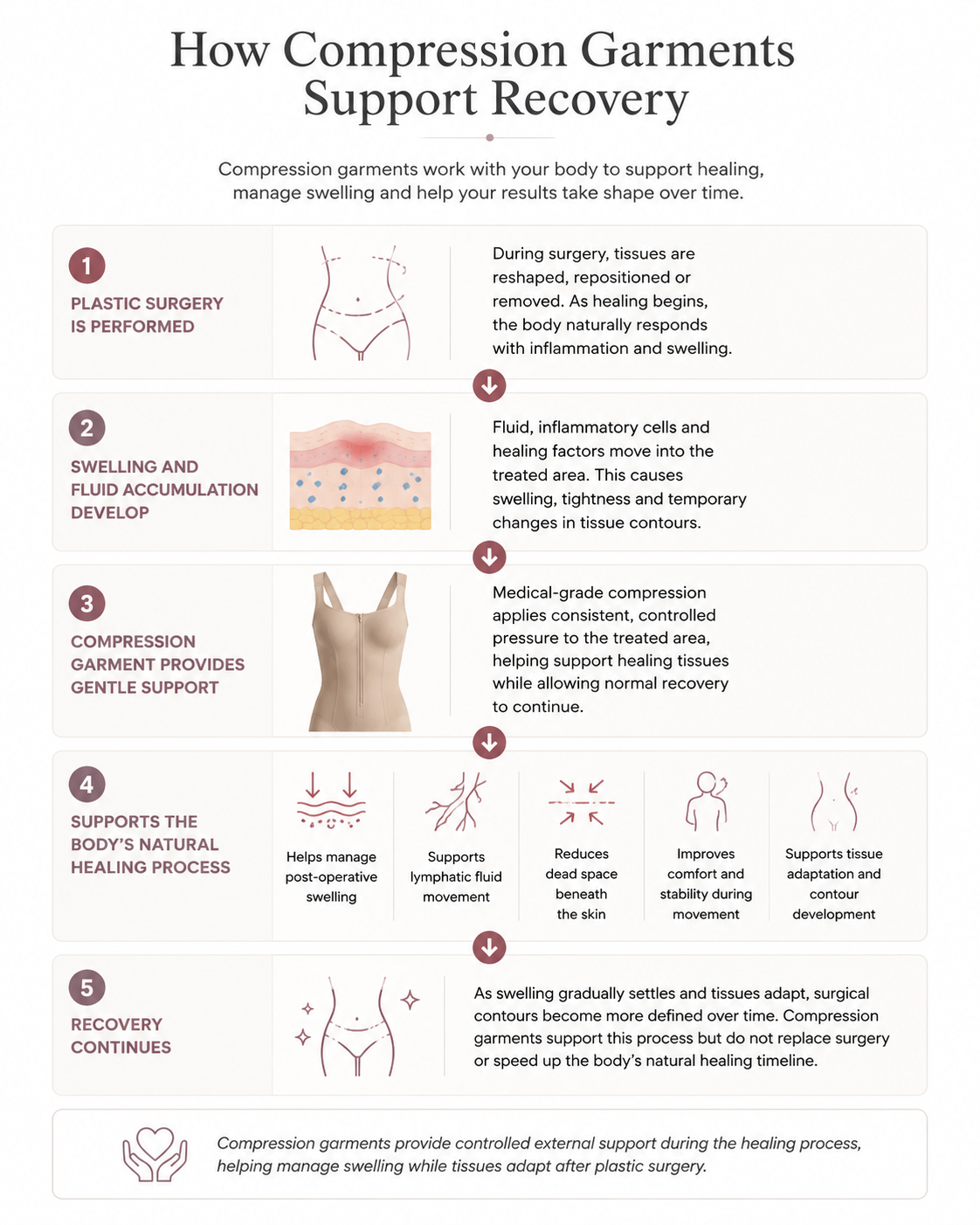
Many patients assume compression garments simply “squeeze” the body. In reality, their role is more nuanced.
Several mechanisms may contribute to their benefits during recovery, such as:
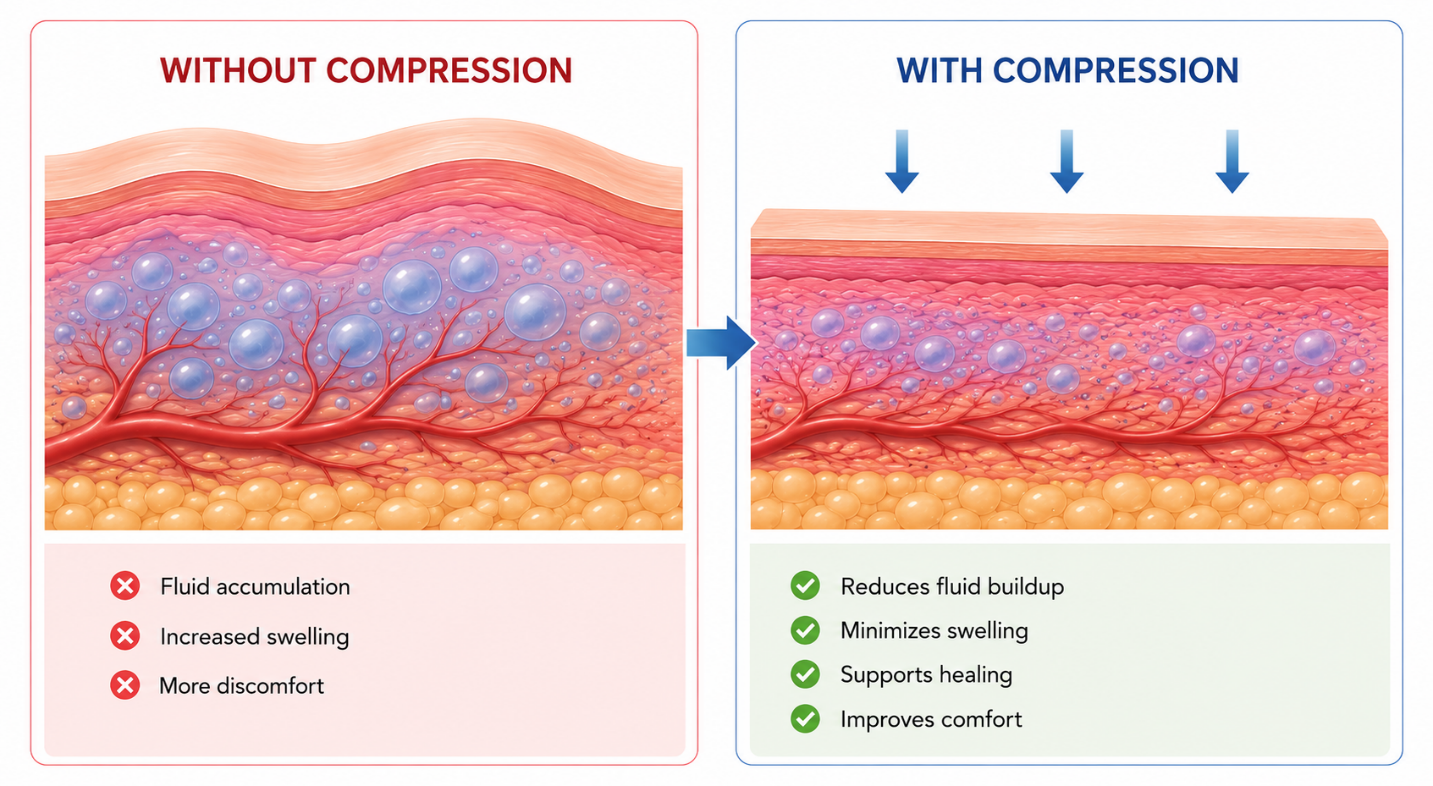
- Supporting tissue adaptation – after procedures such as liposuction or body contouring surgery, tissues need time to adapt to their new contours. Compression helps provide external support while these tissues heal and settle.
- Assisting fluid management – swelling develops when fluid accumulates within the tissues during healing. Gentle, consistent compression may help support the body’s natural movement of excess fluid through the circulatory and lymphatic systems.
- Reducing dead space – certain surgical procedures create temporary spaces beneath the skin where tissues have been separated or reshaped. Compression may help minimise these spaces while tissues reconnect during healing.
- Improving comfort – some patients report that compression garments provide a feeling of support and stability, particularly during movement in the early recovery period.
- Supporting contour maturation – as swelling gradually decreases, compression garments may help support tissue adaptation while final contours continue to develop.
What can compression garments realistically achieve?
Compression garments are an important recovery tool, but it is equally important to understand their limitations.
Potential benefits may include:
- Swelling support – swelling is a normal response to surgery and may persist for weeks or months, depending on the procedure performed. Compression garments may help support the body’s natural management of excess fluid during recovery.
- Improved comfort – many patients report feeling more supported when wearing their garments, particularly during movement and daily activities in the early stages of healing.
- Tissue support – after surgery, tissues require time to adapt and stabilise. Compression garments provide gentle external support while this process occurs.
- Support for contour development – as swelling gradually settles, compression garments may help support tissue adaptation and allow developing contours to become more apparent.
- Improved confidence during recovery – recovery can feel unpredictable, especially during periods of swelling and tissue tightness. Some patients feel more reassured knowing that the treated area is being supported throughout the healing process.
- Integration with broader recovery plans – compression garments are often used alongside other recovery measures such as manual lymphatic drainage, early mobilisation and follow-up care to support overall recovery.
However, compression garments do not:
- Remove fat
- Accelerate weight loss
- Replace surgery
- Permanently reshape untreated tissues
- Guarantee a specific aesthetic outcome
Their role is to support recovery rather than directly create surgical results.
Which procedures commonly require compression garments?
Compression garments may be recommended following a variety of procedures, including:
PROCEDURE | WHY COMPRESSION MAY BE USED |
Liposuction | Swelling management and tissue support |
Abdominoplasty | Support for abdominal healing |
Body contouring after major weight loss | Support for extensive tissue remodelling |
Brachioplasty | Arm support during recovery |
Thigh reduction surgery | Management of swelling and tissue adaptation |
Body lift procedures | Support across larger treatment areas |
Facial procedures | Management of facial swelling |
It is important to note that the exact garment type and duration vary according to the procedure performed.
Are all compression garments the same?
Not all compression garments are the same, as different garments are designed for different anatomical regions and recovery goals.
Common examples include:
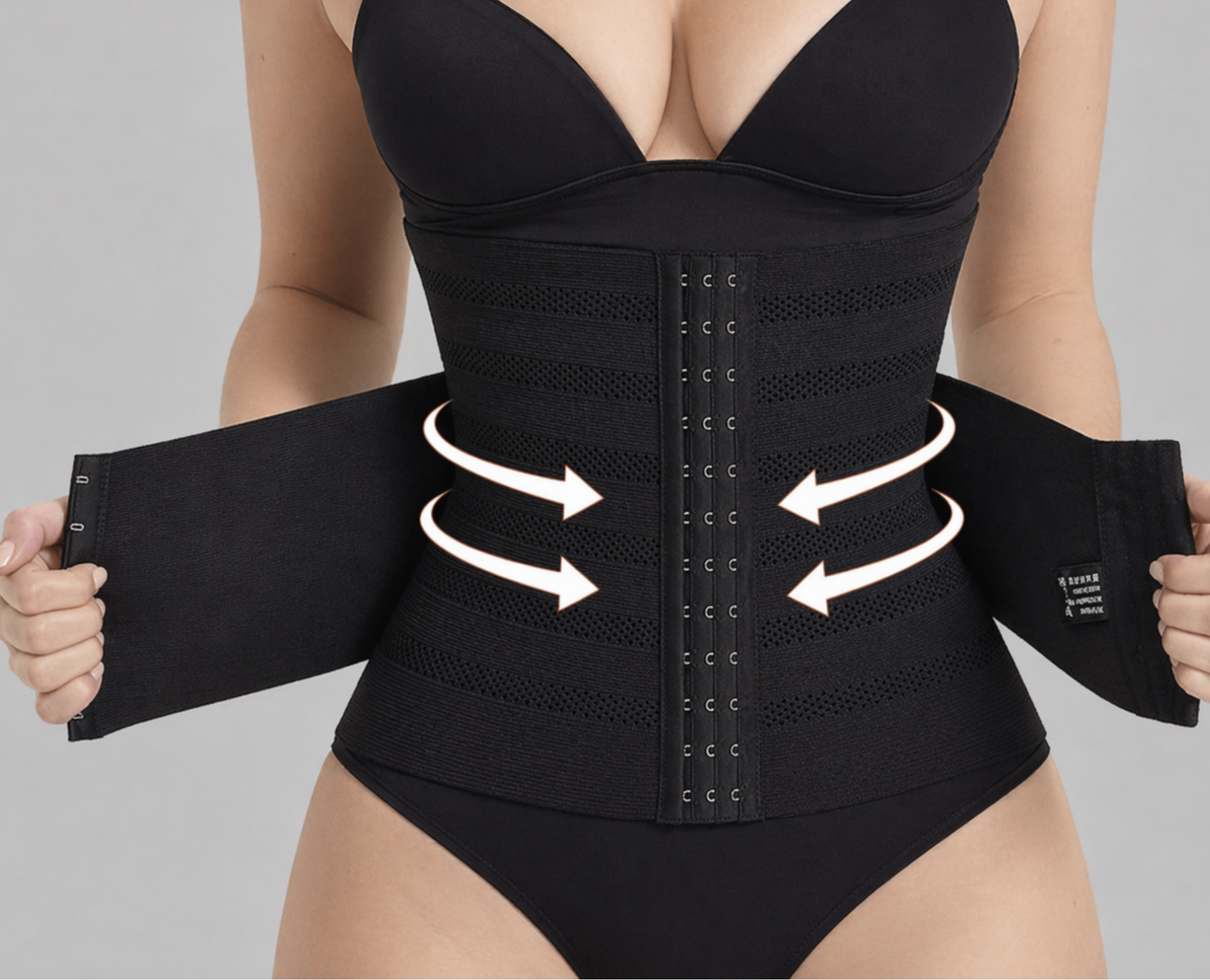
- Abdominal binders – often used following abdominal procedures to provide support around the waist and abdomen.
- Compression bodysuits – commonly prescribed following liposuction, including radiofrequency-assisted liposuction or body contouring procedures involving multiple areas.
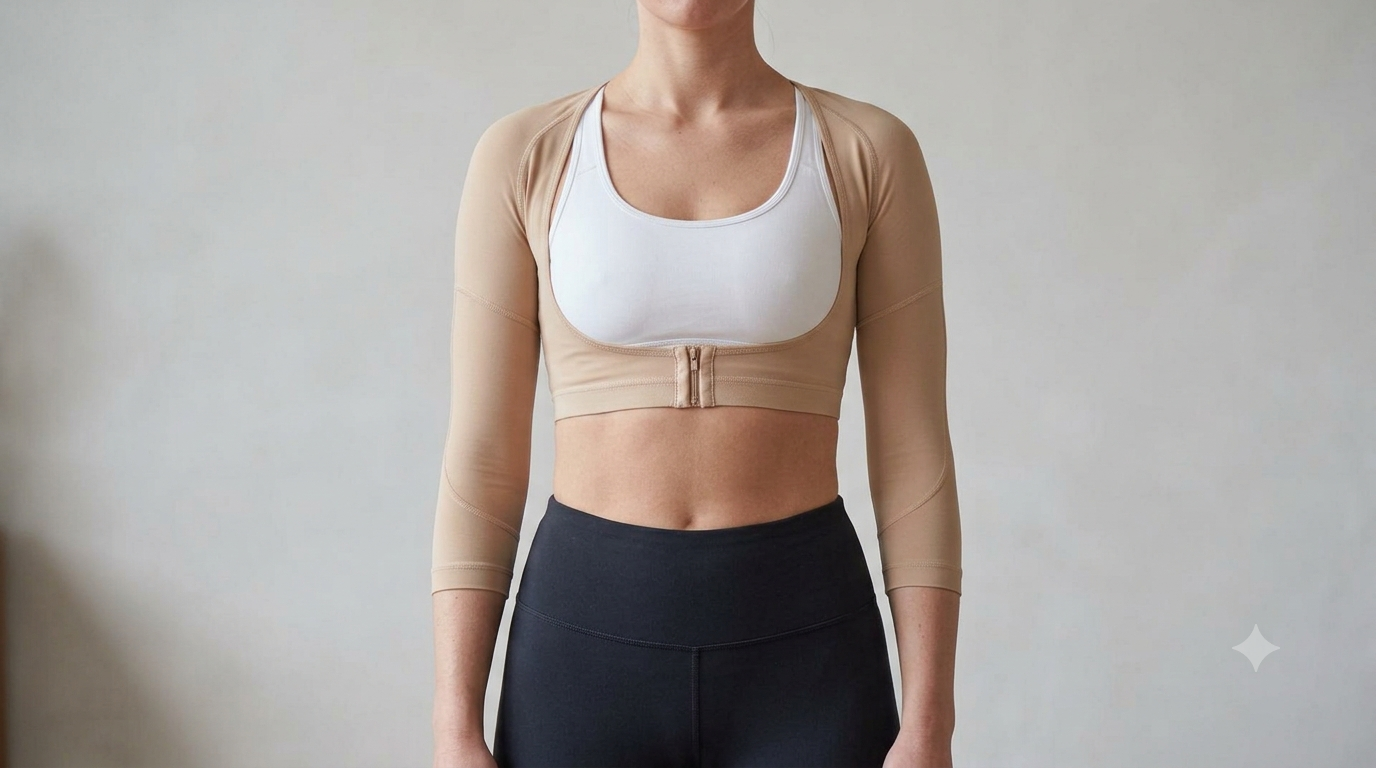
- Arm compression garments – designed for recovery after brachioplasty or arm liposuction.
- Thigh compression garments – used following thigh contouring procedures.
- Facial compression garments – sometimes recommended after facial surgery to help manage swelling and support healing tissues.
Why is proper garment fit important?
One of the most common misconceptions is that tighter compression automatically produces better results.
In reality, excessive compression may:
- Affect circulation and blood supply
- Cause discomfort
- Restrict movement
- Create pressure-related problems
- Reduce patient compliance
Conversely, garments that are too loose may not provide adequate support.
An appropriately fitted garment should feel supportive without causing significant pain, numbness or excessive restriction.
This is why garment selection and fitting form an important part of post-operative care.
What should I expect when wearing a compression garment?
During the first few days after surgery, compression garments often feel noticeably firm because post-operative swelling is typically at its highest. Some patients describe the garment as providing a sense of support and stability around the treated area, particularly when moving, standing or changing positions.
As swelling gradually decreases, the garment may begin to feel looser. This is often a normal part of recovery and does not necessarily indicate that the garment is no longer effective. Depending on the procedure performed and the stage of healing, adjustments or replacement garments may occasionally be recommended.
Patients should be able to breathe comfortably, move safely and perform normal daily activities while wearing the garment. Significant pain, numbness, tingling, skin irritation or breathing difficulty should be discussed with the treating surgeon.
What are the stages of compression garments during recovery?
Many patients assume they will wear the same compression garment throughout recovery. In reality, compression needs often change as healing progresses.
Immediately after surgery, tissues require greater support while swelling is typically at its highest. As recovery advances and swelling gradually settles, garment requirements may change to maintain appropriate compression, comfort and tissue support.
Not every patient will require multiple garments and recommendations vary according to the procedure performed, healing progress and surgeon preferences. However, recovery is often described in stages:
RECOVERY STAGE | TYPICAL TIMEFRAME | ROLE OF THE GARMENT | COMMON FEATURES |
Stage 1: Initial Healing Phase | First 1 to 2 weeks | Supports newly operated tissues, assists swelling management and helps minimise fluid accumulation during the early recovery period. | Firmer compression, continuous wear, often worn day and night according to the surgeon’s instructions. |
Stage 2: Shaping & Contouring Phase | Approximately 2 to 6 weeks | Continues swelling support while helping tissues adapt to developing contours as healing progresses. | Moderate compression, greater flexibility and often adjustable designs to accommodate changing body measurements. |
Stage 3: Long-Term Recovery & Maintenance | 6 weeks onwards (when indicated) | Provides ongoing support during later stages of tissue remodelling and contour maturation. | Lighter compression, improved comfort and greater suitability for normal daily activities. |
Because every procedure and recovery journey is different, some patients may transition between stages earlier or later than others. Garment progression should always be guided by the treating surgeon rather than a fixed timeline alone.
What happens if I stop wearing my compression garment too early?
Although swelling may appear to improve within the first few weeks, deeper tissues continue healing for much longer. Removing compression garments earlier than recommended may reduce tissue support during this recovery phase and may affect comfort, swelling management and tissue adaptation. For this reason, patients should follow the personalised timeline provided by their surgeon.
Why does surgeon guidance matter?
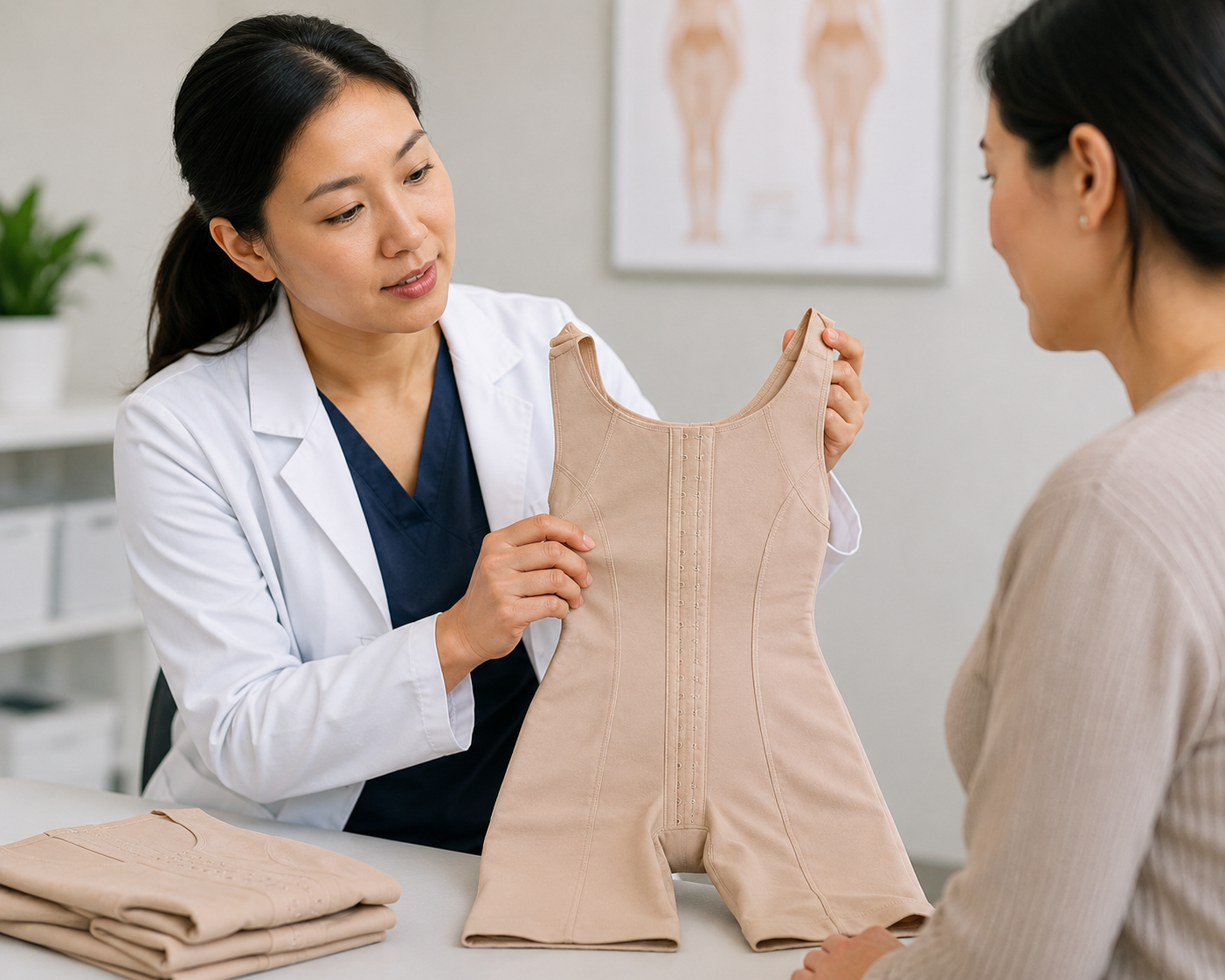
Compression garments are not prescribed according to a universal formula.
The type of garment, amount of compression, duration of use and progression of recovery all depend on the procedure performed and how healing is progressing.
Recommendations that may be appropriate for one patient may not be appropriate for another.
That is why compression garments are most effective when incorporated into a structured recovery plan that is tailored to the individual’s surgery and recovery goals.
How much do compression garments cost in Singapore?
The cost of compression garments varies depending on the type of surgery performed, the anatomical area being treated and the level of support required during recovery. A garment used after facial surgery differs significantly from one prescribed following liposuction, abdominoplasty or body contouring procedures involving multiple areas.
Each compression garment at Pearl Plastic Surgery typically range from $180-280, depending on the type of garment and surgical procedure involved.
Recovery is more than just wearing a garment
Compression garments are an important part of post-operative care, but they represent just one aspect of the recovery process. Optimal healing depends on a combination of appropriate wound care, follow-up assessments, gradual return to activity and adherence to your surgeon’s post-operative instructions.
Depending on the procedure performed and your stage of recovery, additional supportive measures may also be recommended. These may include manual lymphatic drainage to support the body’s natural management of swelling, scar management to encourage healthy scar maturation, and LED light therapy where appropriate to support skin healing. Together with compression garments, these measures form part of a personalised recovery plan designed to support healing as tissues settle and final surgical results gradually become more apparent.
Book a Consultation
Many patients are surprised by how much of the surgical journey occurs after the procedure itself. Swelling, tissue remodelling and contour maturation continue long after surgery has been completed.
At Pearl Plastic Surgery, recovery planning forms an important part of the overall treatment process. Dr Pearlie Tan provides guidance on post-operative care, including the appropriate use of compression garments, recovery milestones and supportive treatments where indicated.
Book an appointment to learn more about recovery after plastic surgery and how compression garments may fit into your post-operative care plan.

Surgery Creates the Shape, Healing Reveals It
Frequently Asked Questions
Why do I need to wear a compression garment after surgery?
Compression garments are commonly recommended to support healing tissues, assist swelling management and provide support during recovery.
Do compression garments reduce swelling?
They may help support the body’s natural management of post-operative swelling, although swelling remains a normal part of healing.
Do compression garments help after liposuction?
Yes, compression garments are commonly prescribed following liposuction to support tissue adaptation and help manage swelling during recovery.
Can compression garments improve surgical results?
Compression garments do not create surgical results directly, but they do support the healing environment in which recovery occurs.
How many hours a day should I wear my compression garment?
During the early stages of recovery, many patients are advised to wear their compression garments for most or all of the day, removing them only when instructed. The exact schedule depends on the procedure performed, the stage of healing and your surgeon’s recommendations.
How tight should a compression garment be?
The garment should feel supportive without causing significant pain, numbness, tingling or breathing difficulty. Excessively tight garments may not be beneficial.
How do I know if my compression garment is too loose or too tight?
Many patients worry that their garment is either not tight enough to be effective or too tight to be safe. The goal is not maximum compression, but appropriate compression.
IF THE GARMENT IS TOO TIGHT | IF THE GARMENT IS TOO LOOSE |
Significant pain or discomfort | Little sense of support |
Numbness or tingling | Excess movement of treated tissues |
Difficulty breathing | Garment rides up or shifts frequently |
Deep pressure marks that persist | Gaps between the garment and the body |
Restricted movement beyond expected post-operative discomfort | Reduced compression as swelling decreases |
Can I remove my compression garment for showering?
This depends on the stage of recovery and the surgeon’s instructions. Specific guidance will be provided according to the procedure performed.
Can I sleep without my compression garment?
Many patients are advised to wear their garments continuously during the early stages of recovery. The appropriate schedule varies between individuals.
What happens if my compression garment feels too loose?
As swelling decreases, garment fit may change. In some situations, adjustments or replacement garments may be recommended.
Will I need a different compression garment as swelling decreases?
In some cases, yes. As swelling reduces, garment fit may change. Your surgeon may recommend adjustments or alternative garments depending on your stage of recovery.
Can I wear shapewear instead of a post-surgical compression garment?
Not necessarily. Post-surgical compression garments are designed to provide controlled and consistent compression while accommodating healing tissues. Ordinary shapewear may not provide the appropriate level or distribution of support recommended during recovery.
Can I exercise while wearing compression garments?
This depends on the stage of recovery and the type of exercise being performed. Gentle walking is often encouraged early in recovery, while more strenuous activities may require clearance from the treating surgeon. Recommendations vary according to the procedure performed.
Can I wash my compression garment?
Yes, compression garments generally require regular washing to maintain hygiene, particularly when worn for prolonged periods. Patients should follow the manufacturer’s care instructions to help preserve garment elasticity and compression performance.
What are some compression garment problems I should watch out for?
While most patients tolerate compression garments well, you should inform your surgeon if you experience:
- Significant pain
- Increasing swelling despite garment use
- Numbness or tingling
- Skin irritation or breakdown
- Difficulty breathing
- Areas where the garment rolls, bunches or creates excessive pressure
Can compression garments cause complications?
Complications are uncommon when garments are properly fitted and used according to medical advice. However, garments that are excessively tight, poorly fitted or worn incorrectly may contribute to discomfort, pressure-related skin issues or circulation concerns. This is one reason why garment selection and follow-up assessment are important parts of post-operative care.
Can compression garments replace manual lymphatic drainage?
No, compression garments and Manual Lymphatic Drainage serve different functions and may be used together as part of a broader recovery plan.
How long should I wear a compression garment after plastic surgery?
The duration varies according to the procedure performed, the extent of surgery and individual healing progress. Our surgeon will provide personalised recommendations.
Can my compression garment cause an infection?
Compression garments themselves do not usually cause infections. However, because they are worn for long periods and sit directly against healing skin, keeping them clean is an important part of post-operative care.
Sweat, body oils and wound drainage can accumulate on the garment over time. If the garment becomes heavily soiled or is not washed regularly, it may contribute to skin irritation or create an environment where bacteria can multiply. This is why patients are generally advised to follow the cleaning instructions provided with their garment and their surgeon’s post-operative care recommendations.
How should I clean my compression garment?
Most medical-grade compression garments can be washed with a mild detergent in cool or lukewarm water. Harsh chemicals, bleach, fabric softeners and high heat should generally be avoided, as they may damage the elastic fibres that provide the garment’s compression. The garment should usually be air-dried rather than tumble dried, unless the manufacturer’s instructions state otherwise.
Many patients find it helpful to have a second garment so one can be worn while the other is being washed.
 Pearl Plastic Surgery