
Vbeam Vascular Laser Treatment in Singapore

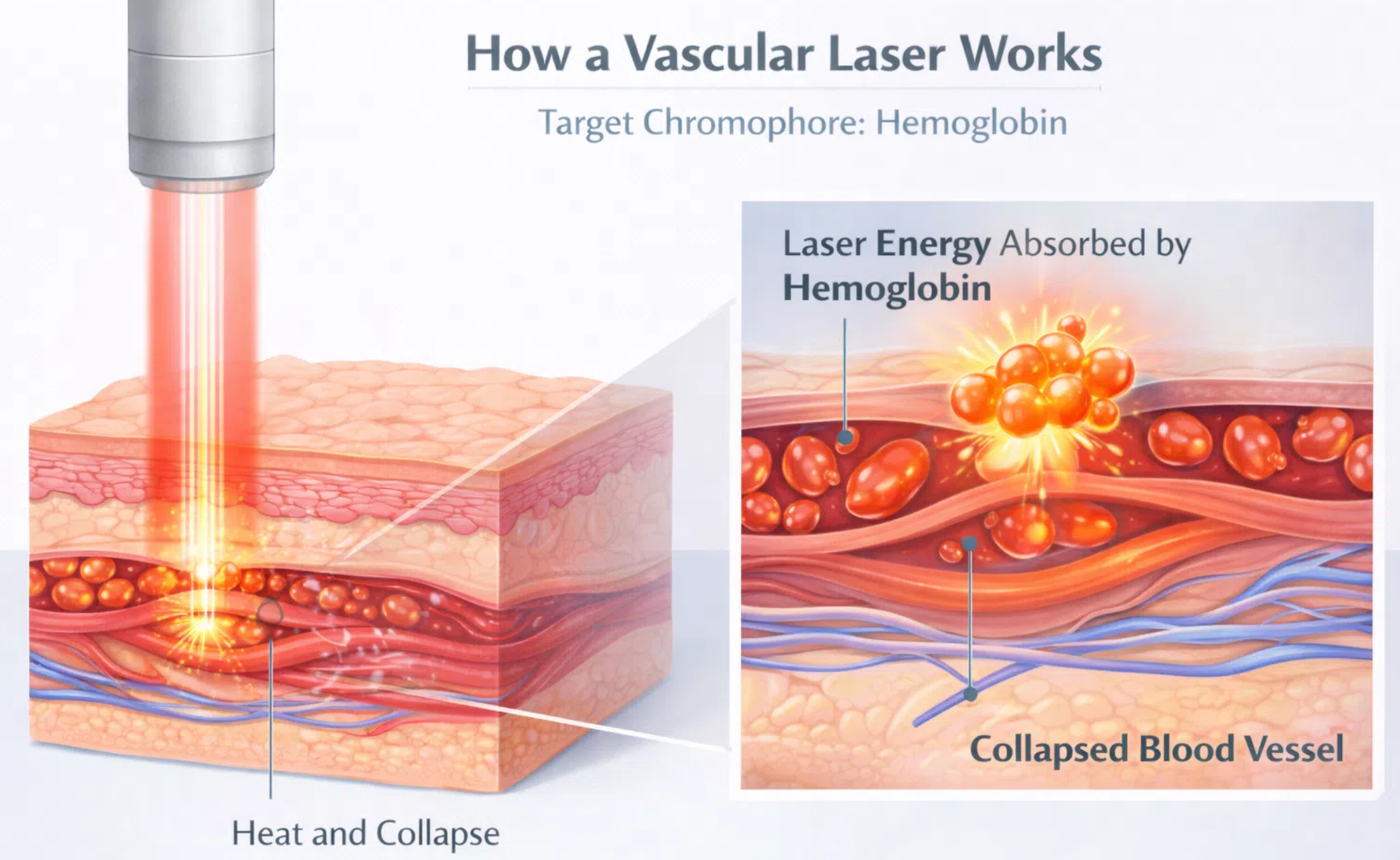
Vbeam is a pulsed dye laser that uses a specific wavelength of light to target haemoglobin within selected blood vessels. The absorbed energy heats the vessels, allowing them to gradually become less visible while limiting unnecessary effects on the surrounding skin.
This treatment effectively addresses facial redness, visible capillaries, certain vascular malformations (such as port-wine stains), rosacea, and selected scars. Dr Pearlie frequently utilizes vascular laser therapy to reduce inflammation in fresh, red scars, significantly reducing the risk of hypertrophic scars and keloid formation. Additionally, if used early, it can help prevent and reduce risks of post-inflammatory hyperpigmentation (PIH), a common concern for Asian skin (Fitzpatrick Types IV–VI).
How does Vbeam work?
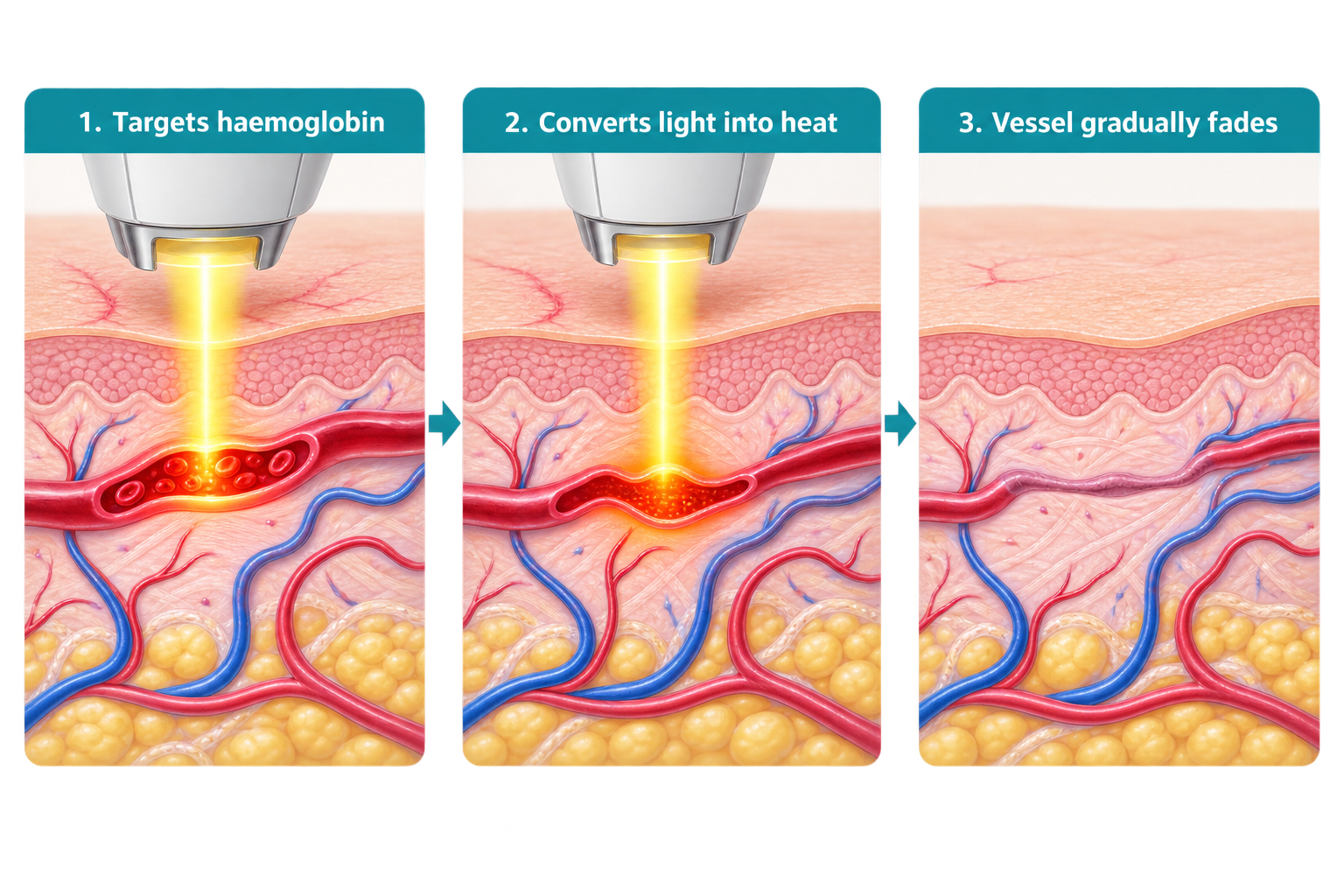
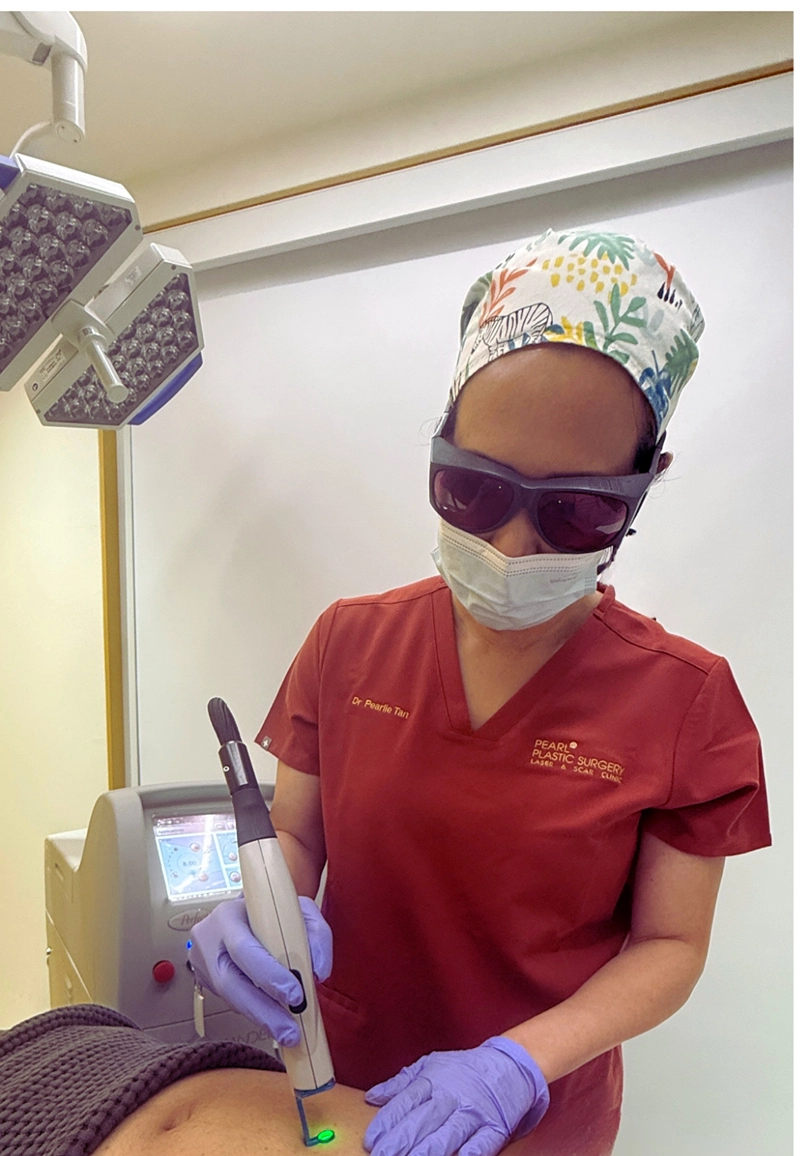
Vbeam works through a process known as selective photothermolysis. This means that the laser is designed to heat a specific target within the skin while limiting thermal effects on the surrounding tissue.
Stage | What Happens |
The laser targets haemoglobin | Vbeam delivers 595 nm yellow light, which is preferentially absorbed by haemoglobin within selected blood vessels. |
Light energy is converted into heat | The absorbed light becomes controlled heat, affecting the targeted vessel. The laser settings can be adjusted according to factors such as the vessel’s size, depth and location, as well as the patient’s skin type. |
The vessel becomes less visible | Following treatment, the affected vessel is gradually broken down and cleared by the body. Redness or visible vessels may therefore fade over the following days and weeks. |
Vbeam also incorporates a Dynamic Cooling Device, which delivers a brief cooling spray to the skin immediately before each laser pulse. This helps protect the surface of the skin and improve comfort during treatment.
What skin concerns can Vbeam treat?
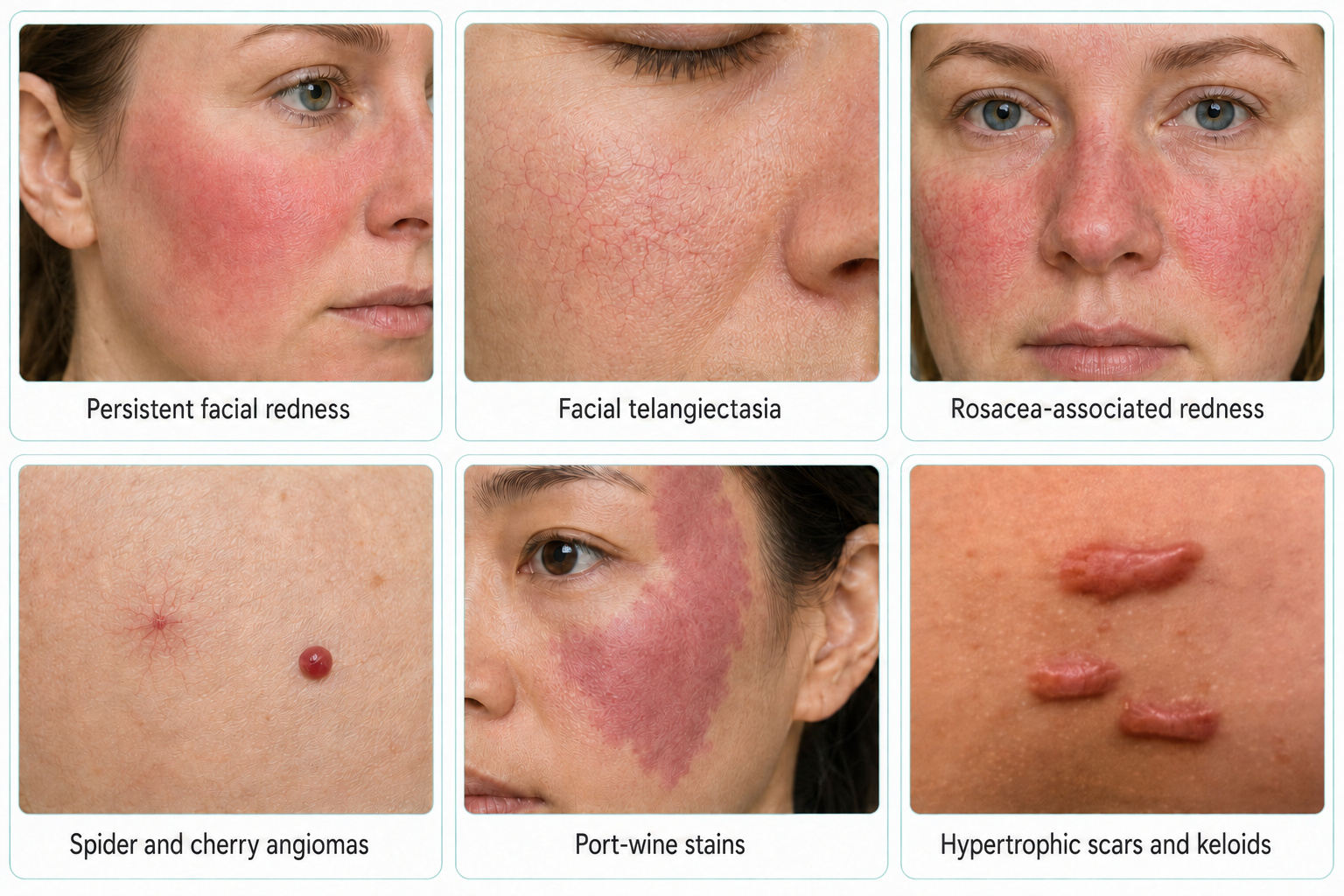
Vbeam is primarily used to treat skin concerns associated with visible or enlarged blood vessels. Depending on the diagnosis and characteristics of the vascular concern:
- Red scars, hypertrophic scars and keloids — Reduces persistent redness in some scars, reducing the risks of developing poor scarring such as hypertrophic scars, keloids and PIH (Post-Inflammatory Hyperpigmentation).
- Persistent facial redness — Reduces redness caused by visible superficial blood vessels
- Facial telangiectasia — Reduces the appearance of small, visible capillaries commonly described as broken blood vessels
- Rosacea-associated redness — Reduces persistent redness and visible vessels, although it does not address every aspect of rosacea
- Spider and cherry angiomas — Reduces the appearance of selected superficial vascular lesions
- Port-wine stains — Gradually lightens the appearance of the vascular birthmark over a course of treatment
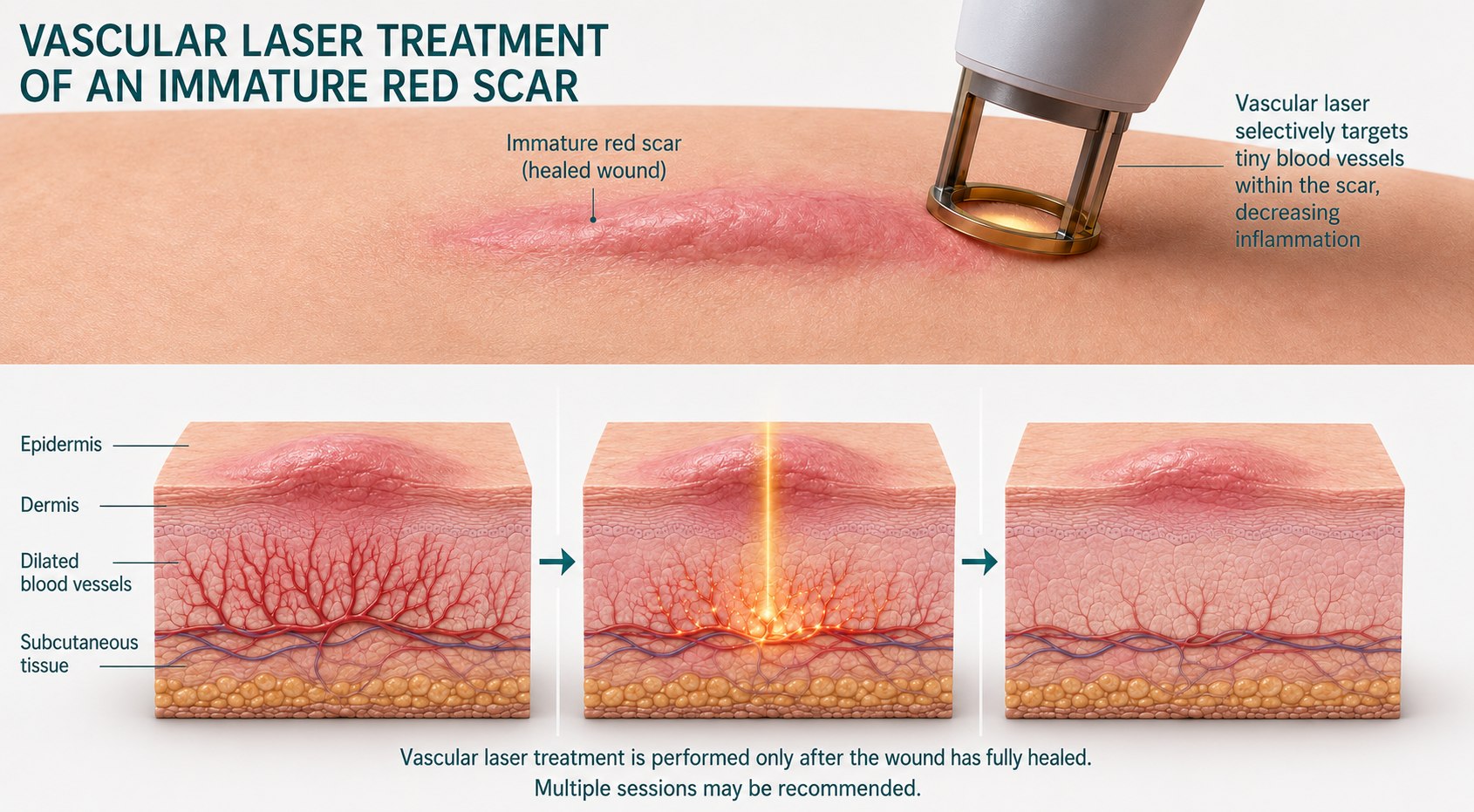
It’s important to note that not every red, pink or purple mark is vascular in nature. Similar-looking concerns can have different causes and require different treatment approaches. Dr Pearlie Tan will assess the area before determining whether Vbeam is suitable.
How does Vbeam compare with IPL and Nd:YAG Laser?
Vbeam, intense pulsed light (IPL) and Nd:YAG laser can all treat vascular skin concerns, but they deliver light differently and target different vessel characteristics. One is not necessarily better than another; the most suitable option depends on the type, depth and extent of the vascular concern, as well as the patient’s skin type.
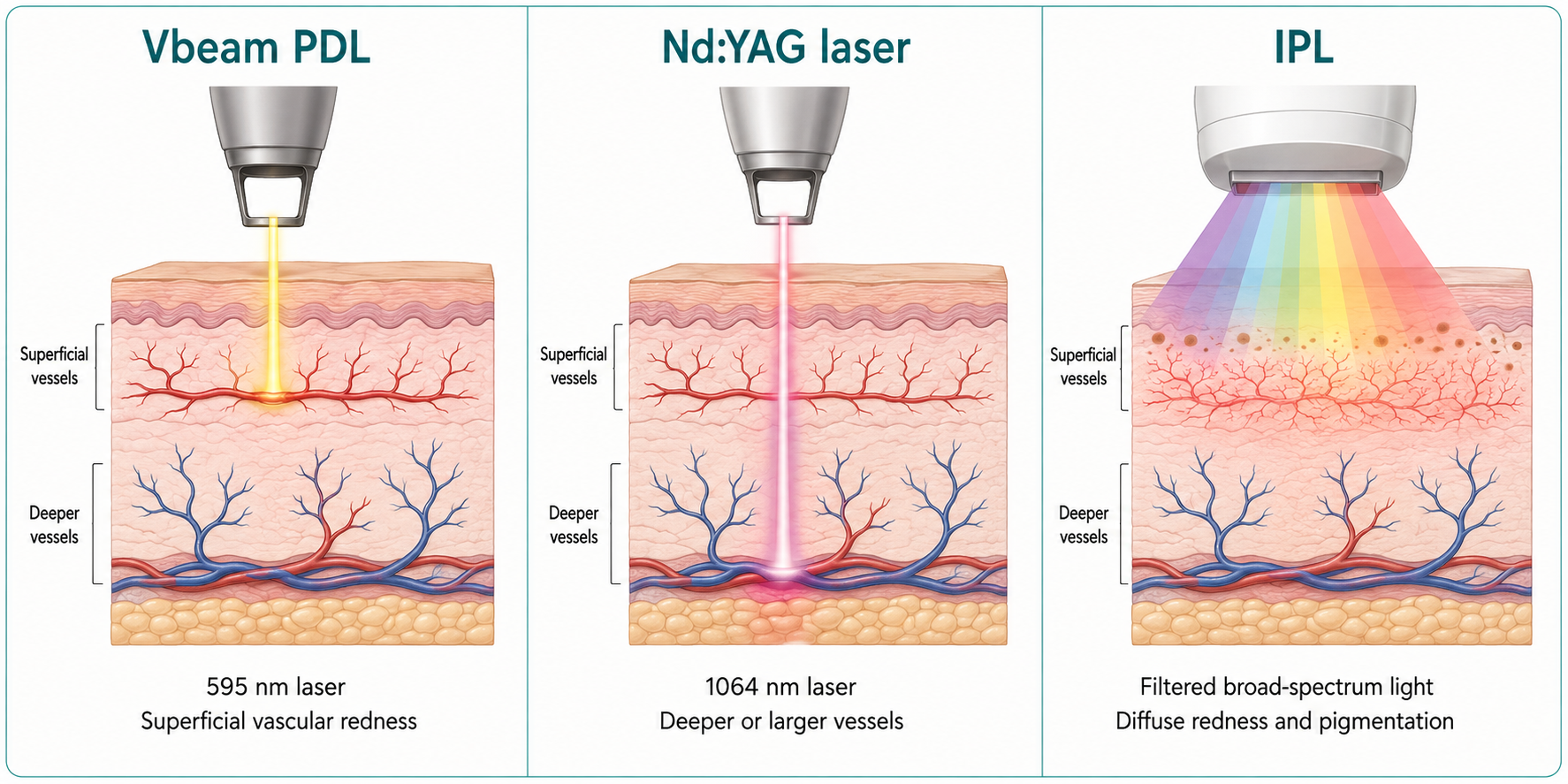
Feature | Vbeam Pulsed Dye Laser | Nd:YAG Laser | Intense Pulsed Light (IPL) |
Technology | Pulsed dye laser | Solid-state laser | Broad-spectrum light treatment |
Wavelength | 595 nm | 1064 nm | Uses a range of filtered wavelengths |
Primary target | Haemoglobin within blood vessels | Deeper epidermal and dermal structures with varying levels of absorption (melanin, haemoglobin, water and collagen) | Haemoglobin, melanin or both, depending on the filter and settings |
Typical treatment role | Treats superficial to moderately deep vascular redness and visible vessels | Treats deeper vessels and selected pigmentation concerns | Treats diffuse redness and selected vascular or pigmentation concerns |
Commonly considered for | Specialised scar treatment, facial redness, pustular acne, telangiectasia, rosacea-associated vessels and selected vascular lesions | Pigmentation in darker skin types, deeper vessels and rejuvenation. | Diffuse redness, visible capillaries, sun-related pigmentation or concerns involving both redness and pigmentation |
Downtime | Redness, swelling or purpura can occur depending on the settings | Redness and swelling can occur depending on the target and settings | Usually causes temporary pinkishness and mild darkening depending on treatment target. |
Dr Pearlie Tan will assess whether Vbeam or another laser or light-based treatment is more appropriate for the concern being treated.
Who is suitable for Vbeam treatment?
Vbeam may be suitable for patients with diagnosed vascular skin concerns, particularly when visible blood vessels or vascular redness contribute to the appearance of the affected area.
Before recommending treatment, we usually consider the following:
- The cause, colour and distribution of the redness
- The size and depth of the targeted vessels
- The location and extent of the treatment area
- Your skin type and natural pigmentation
- Your tendency to develop pigmentation or scarring
- Previous laser treatments and how your skin responded
- Recent sun exposure or tanning
- Current medications and relevant medical conditions
- Your treatment goals and tolerance for downtime
Can Vbeam be used on darker skin?
Vbeam can treat selected vascular concerns in darker skin, but treatment requires additional care because melanin can also absorb some of the laser energy. This can increase the risk of post-inflammatory hyperpigmentation, hypopigmentation and other unwanted skin reactions.
Dr Pearlie will assess your skin tone, pigmentation history and vascular concern before selecting the treatment settings. Appropriate cooling, conservative settings and careful monitoring help protect the surrounding skin while treating the targeted vessels.
What can I expect during Vbeam treatment?
Vbeam treatment takes place as an outpatient procedure. The exact process and treatment settings will depend on the vascular concern and the size of the area being treated.
Before Treatment
A clinical assessment will confirm whether Vbeam is appropriate for your concern. Your skin type and the colour, size, depth and location of the targeted vessels will guide the choice of laser settings.
Before treatment begins, the treatment area will be cleansed and for larger areas of treatment, strong topical anaesthetic (numbing) cream will be applied for 20–30 minutes.
During Treatment
The Vbeam handpiece delivers short pulses of 585/595 nm laser light to the treatment area. The device releases a brief cooling spray immediately before each pulse to protect the skin surface and improve comfort.
You may feel a brief snapping, warming or stinging sensation as each pulse reaches the skin. Particular to treatment of keloids and hypertrophic scars, intralesional injections are often administered after laser therapy is completed.
Treatment time varies according to the size and number of areas being treated. Smaller areas generally take less time (5–10min) than extensive redness or larger and multiple keloids and hypertrophic scars (10–20min).
How many Vbeam sessions will I need?
The number of Vbeam sessions varies according to the condition being treated, the size and depth of the vessels, the extent of the treatment area and how the skin responds.
Some small, superficial vessels can show improvement after fewer sessions. More extensive concerns, including hypertrophic scars, keloids, rosacea-associated redness and port-wine stains, often require a course of treatment to achieve a more noticeable change.
Your response after each session will help determine whether you need further treatment and how long to leave between appointments.
When will I see results?
Vbeam results develop gradually as the treated vascular structures become less visible.
Timeline | What to Expect |
Immediately after treatment | The area may appear red, swollen or temporarily darker. Some treatment settings can also produce purple or bruise-like marks known as purpura. |
Over the next few days to weeks | Redness and swelling begin to settle. If purpura develops, depending on the settings used and area of treatment, purpura can take 3 days to 3 weeks to fade completely. |
Over the following weeks | Visible redness or individual blood vessels may become less noticeable. |
After further sessions | Additional treatments can produce progressive improvement when the vascular concern requires a longer course. |
How much does Vbeam treatment cost in Singapore?
The cost of Vbeam treatment depends on:
- The type and extent of the vascular concern
- The size and number of areas treated
- The treatment settings required
- The number of sessions included in your treatment plan
Following your consultation, the clinic will provide a personalised quotation based on the recommended treatment approach. Generally, the cost of Vbeam laser treatment at Pearl Plastic Surgery starts from $600.
Vbeam treatment in Singapore
Persistent redness and visible blood vessels can have different underlying causes, so the right treatment begins with an accurate assessment.
During your consultation, Dr Pearlie will examine your skin, discuss your concerns and determine whether Vbeam is suitable for you. If another laser, light-based treatment or medical approach is more appropriate, she can advise you on the available options.
Book an appointment to learn more about Vbeam treatment and receive a personalised treatment plan.

Frequently Asked Questions
Is Vbeam treatment painful?
Most patients describe the sensation as a brief snap, sting or burst of warmth. The device releases a cooling spray before each laser pulse to protect the skin surface and improve comfort.
Is there downtime after Vbeam?
Downtime depends on the treatment settings and vascular concern. Temporary redness and swelling are common, while stronger settings can produce purple or bruise-like marks known as purpura. If purpura develops, the discolouration gradually fades as the skin recovers. Depending on the settings used and area of treatment, purpura can take 3 days to 3 weeks to fade completely.
Can I wear makeup after Vbeam treatment?
You may be able to apply makeup once the skin feels comfortable and remains intact. However, you should avoid makeup if the treated area is blistered, crusted or particularly sensitive. Follow the aftercare instructions provided for your skin.
Does Vbeam treat rosacea permanently?
Vbeam reduces persistent redness and visible blood vessels associated with rosacea, but it does not cure the underlying condition. New redness or vessels can develop over time, so some patients require maintenance treatment alongside appropriate rosacea care.
Can Vbeam treat acne scars?
Yes. The Vbeam laser effectively targets persistent redness in selected acne scars while accelerating the resolution of active pustular acne. Additionally, Vbeam helps reduce the frequency of future breakouts by targeting and eradicating Cutibacterium acnes (C. acnes), the primary bacteria involved in acne development.
Can redness return after Vbeam treatment?
Yes. Vbeam treats existing visible vessels but cannot prevent new vessels from forming. Sun exposure, ageing, rosacea and other underlying factors can cause redness to return over time.