
Abdominoplasty (Tummy Tuck)

Abdominoplasty, commonly known as a tummy tuck, is a surgical procedure that reshapes the abdomen by removing excess skin and, where appropriate, tightening the abdominal wall.
Depending on the individual’s anatomy and treatment goals, the procedure may involve:
- Removing excess abdominal skin
- Reducing skin folds or redundancy in the lower abdomen
- Tightening the abdominal wall where indicated
- Repositioning the umbilicus (belly button)
- Refining the abdominal and waistline contours
The aim is to create a smoother abdominal contour that remains proportionate to the rest of the body. Abdominoplasty is not a weight-loss procedure, and outcomes vary between individuals.
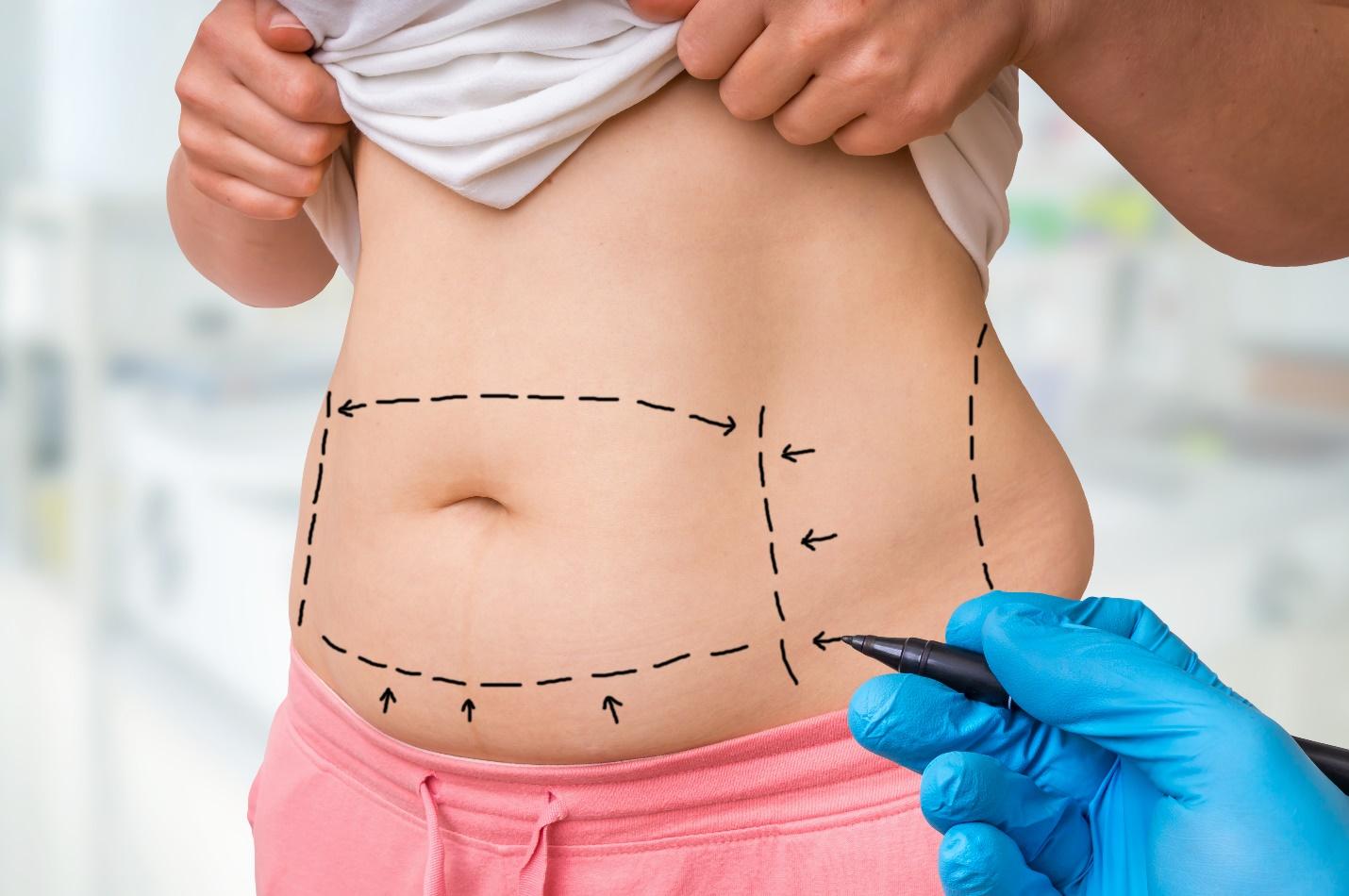
Why does the abdomen change over time?
The shape of the abdomen is influenced by several layers, including the skin, subcutaneous fat, connective tissues and abdominal wall.
Pregnancy, significant weight changes and ageing can affect these layers in different ways. The skin may stretch and lose some of its ability to retract, while the abdominal wall may become lax or separated. Changes in fat distribution can also affect the contour of the abdomen and waist.
These changes may result in:
- Loose or overhanging abdominal skin
- Skin folds around the lower abdomen
- Persistent abdominal fullness
- Reduced waistline definition
- Stretch marks caused by skin expansion
- Bulging associated with abdominal wall laxity or muscle separation
Exercise can strengthen the abdominal muscles and help reduce body fat, but it cannot directly remove substantially stretched or redundant skin.
When is abdominoplasty considered?
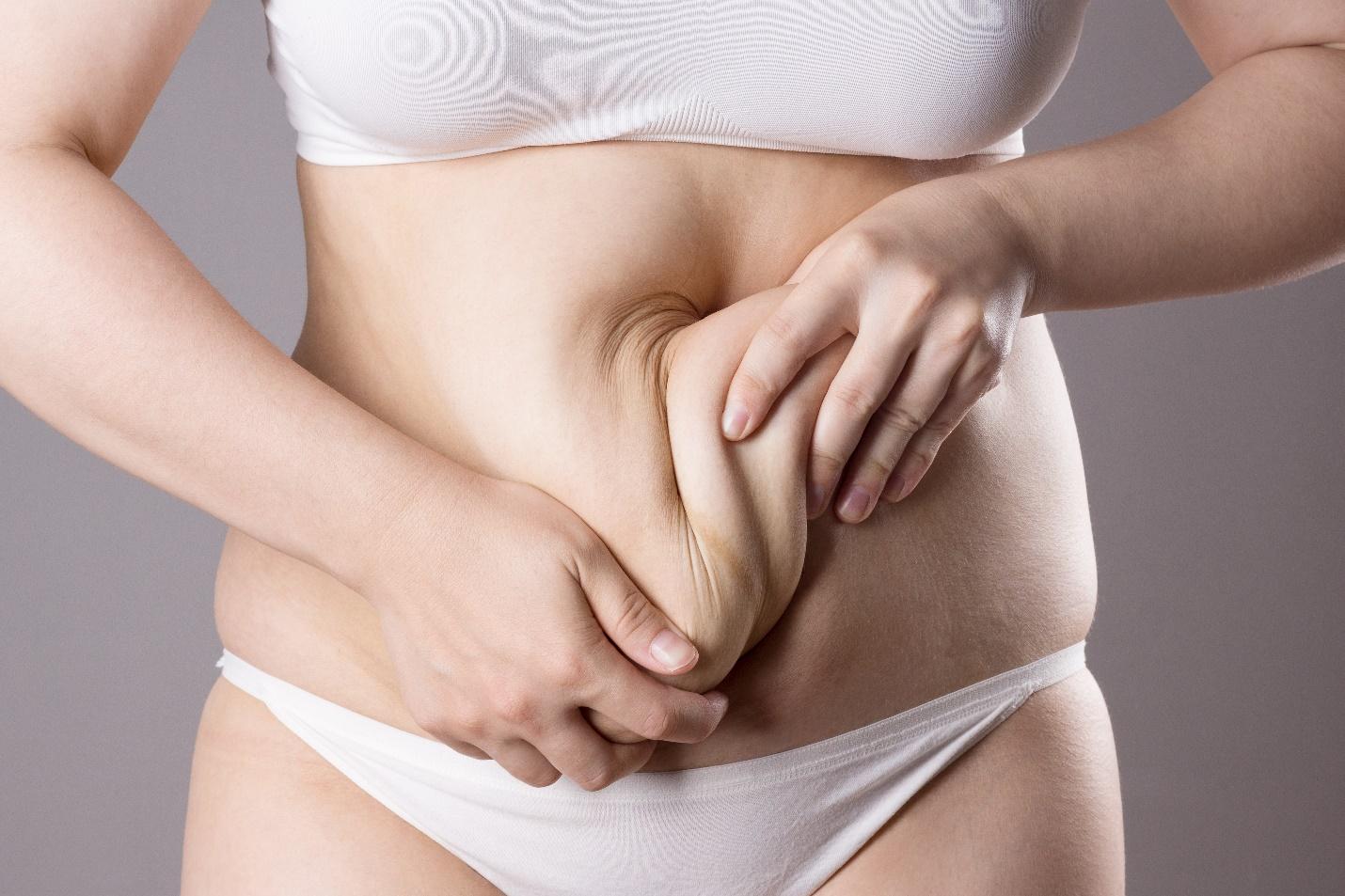
People consider abdominoplasty for different reasons. A common concern is excess skin that remains despite weight management and exercise.
Some individuals develop these changes after pregnancy . Others experience them after significant or massive weight loss, when the skin does not fully retract.
Concerns may include:
- Loose or hanging abdominal skin
- Skin folds that cause irritation or discomfort
- Persistent lower-abdominal laxity
- Changes in body proportions
- Reduced waistline definition
- Difficulty finding comfortably fitting clothing
Abdominoplasty may be considered when body weight is reasonably stable and the individual is in suitable general health. Future pregnancy or substantial weight changes may affect the result, so the timing of surgery should be discussed during consultation.
Abdominoplasty after massive weight loss
Substantial weight loss can improve health and body composition, but excess abdominal skin may remain after weight has stabilised.
This skin may:
- Fold over the lower abdomen
- Cause chafing, irritation or hygiene difficulties
- Affect comfort and clothing fit
- Conceal the underlying change in body contour
For some patients, excess skin extends beyond the front of the abdomen and affects the flanks or lower back. In such cases, a different or more extensive body-contouring procedure may be discussed.
Mini tummy tuck vs Full tummy tuck
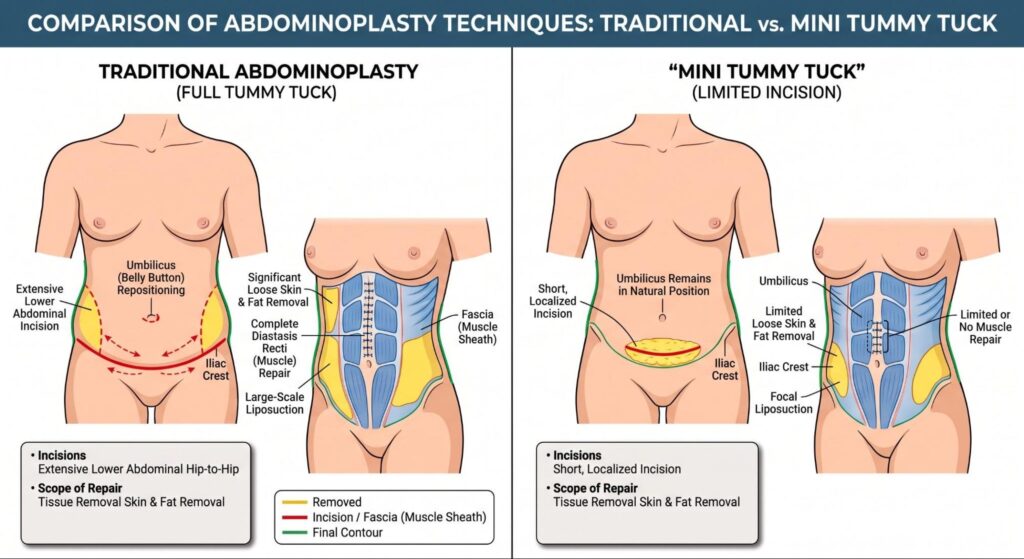
The appropriate technique depends on the location and extent of excess skin, the condition of the abdominal wall and the patient’s treatment goals.
Feature | Mini tummy tuck | Full tummy tuck |
Area addressed | Mainly the lower abdomen below the belly button | Upper and lower abdomen |
Typical suitability | Limited excess skin and laxity below the belly button | More extensive excess skin or laxity across the abdomen |
Incision | Usually shorter, although length varies | Usually longer, depending on the amount of skin removed |
Belly button | Usually not repositioned | Usually brought through a new opening in the repositioned skin |
Abdominal wall tightening | May be performed in selected cases, usually in the lower abdomen | May address more extensive abdominal wall laxity when indicated |
Amount of skin removed | More limited | More extensive |
Scar pattern | Lower-abdominal scar | Lower-abdominal scar and usually a scar around the belly button |
Recovery | May be less extensive, but remains a surgical recovery | Usually more extensive because a larger area is treated |
Neither approach is necessarily better than the other. The appropriate option depends on the distribution of excess skin, degree of abdominal wall laxity, previous scars and overall abdominal anatomy.
MILA (Minimally Invasive Lipo-Abdominoplasty)
Minimally invasive abdominoplasty is a specialised body-contouring procedure designed to reshape the midsection using small, strategically placed access points rather than the lengthy hip-to-hip incision typical of a traditional tummy tuck.
By operating through small incisions hidden within the umbilicus (belly button) and groin folds, surgeons can utilize endoscopic cameras or specialized instruments to tighten the abdominal wall with minimal scarring. This technique is frequently combined with:
- High-definition liposuction to remove stubborn local fat deposits
- Rectus plication to repair diastasis recti (the separation of the abdominal muscles often caused by pregnancy or weight fluctuations) and
- Rib remodelling —a subtle manipulation or fracture of the lower floating ribs—to narrow the rib-cage frame and the waist for a leaner, more attractive body shape and waistline.
With less scarring, this comprehensive, multi-modality approach offers a contoured silhouette, muscular core repair, and a refined waistline while drastically reducing visible surgical marks.
What happens during abdominoplasty?
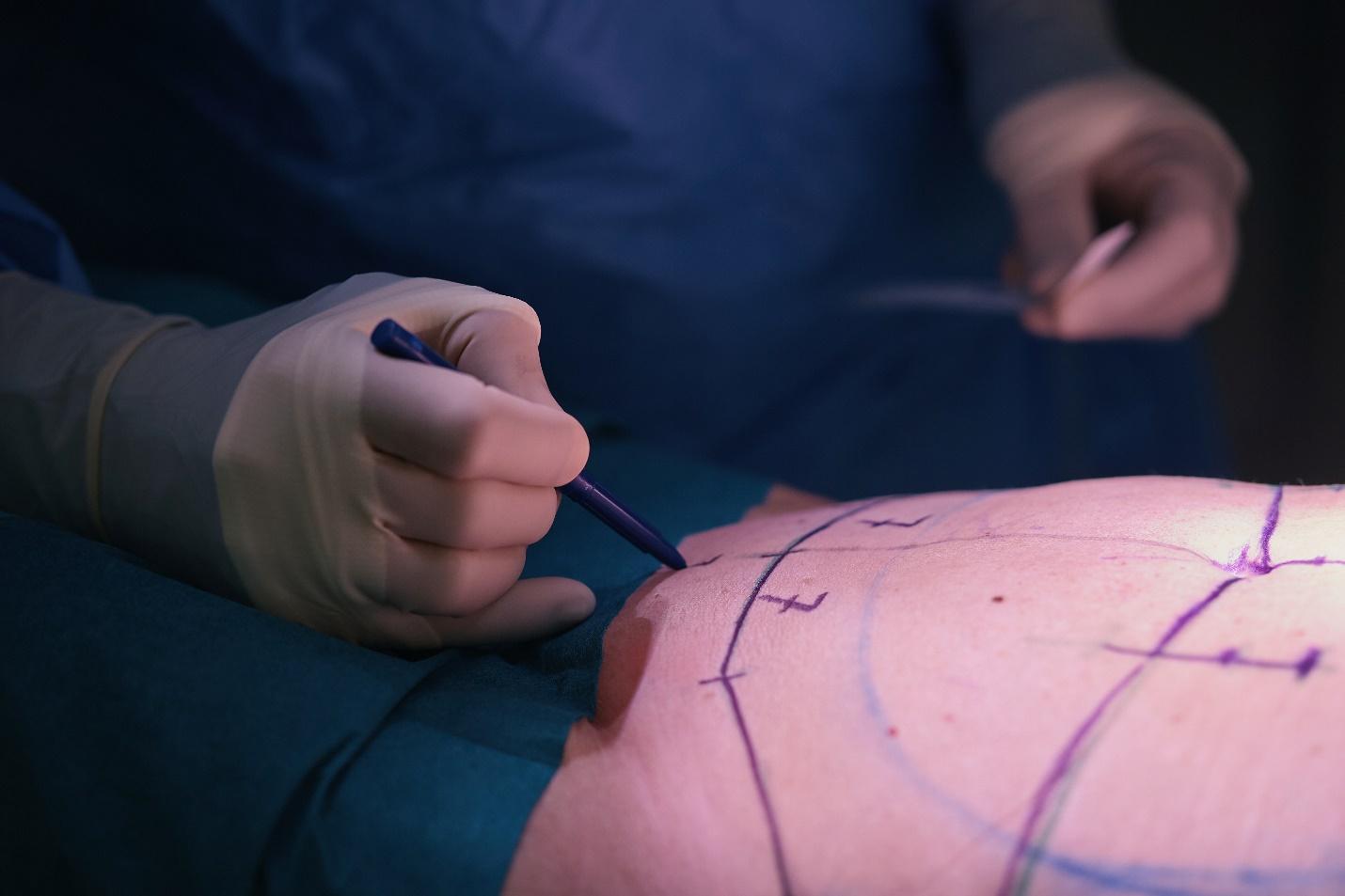
Abdominoplasty is performed under anaesthesia and tailored to the individual’s anatomy. Although the surgical plan varies, the procedure generally involves the following stages:
- Surgical planning — Before surgery, the abdominal contour, skin quality, incision/scar placement, estimated amount of fat and skin excess will be assessed and marked.
- Tissue elevation — The abdominal skin and underlying soft tissue are carefully lifted to allow the treatment area to be reshaped.
- Abdominal wall tightening, where indicated — If abdominal wall laxity or muscle separation is present, the supporting layer over the abdominal muscles may be tightened. Not every patient requires this step.
- Removal and repositioning of tissue — Excess skin is removed, and the remaining tissue is repositioned to create a smoother abdominal contour.
- Umbilical repositioning — During a full abdominoplasty, the belly button is usually brought through a new opening in the repositioned skin.
- Layered closure — The incision is closed in layers, from deep to superficial for optimal healing and scar outcome. Temporary drains may be used in some cases to reduce fluid accumulation.
What happens after an abdominoplasty?
Recovery after abdominoplasty takes place gradually. The experience and timeline vary depending on the extent of surgery and the individual’s healing response.
The first few weeks
During the early healing period, patients may experience:
- Swelling and bruising
- Tightness across the abdomen
- Discomfort around the incision
- Temporary difficulty standing fully upright
- Numbness or changes in skin sensation
- Reduced mobility
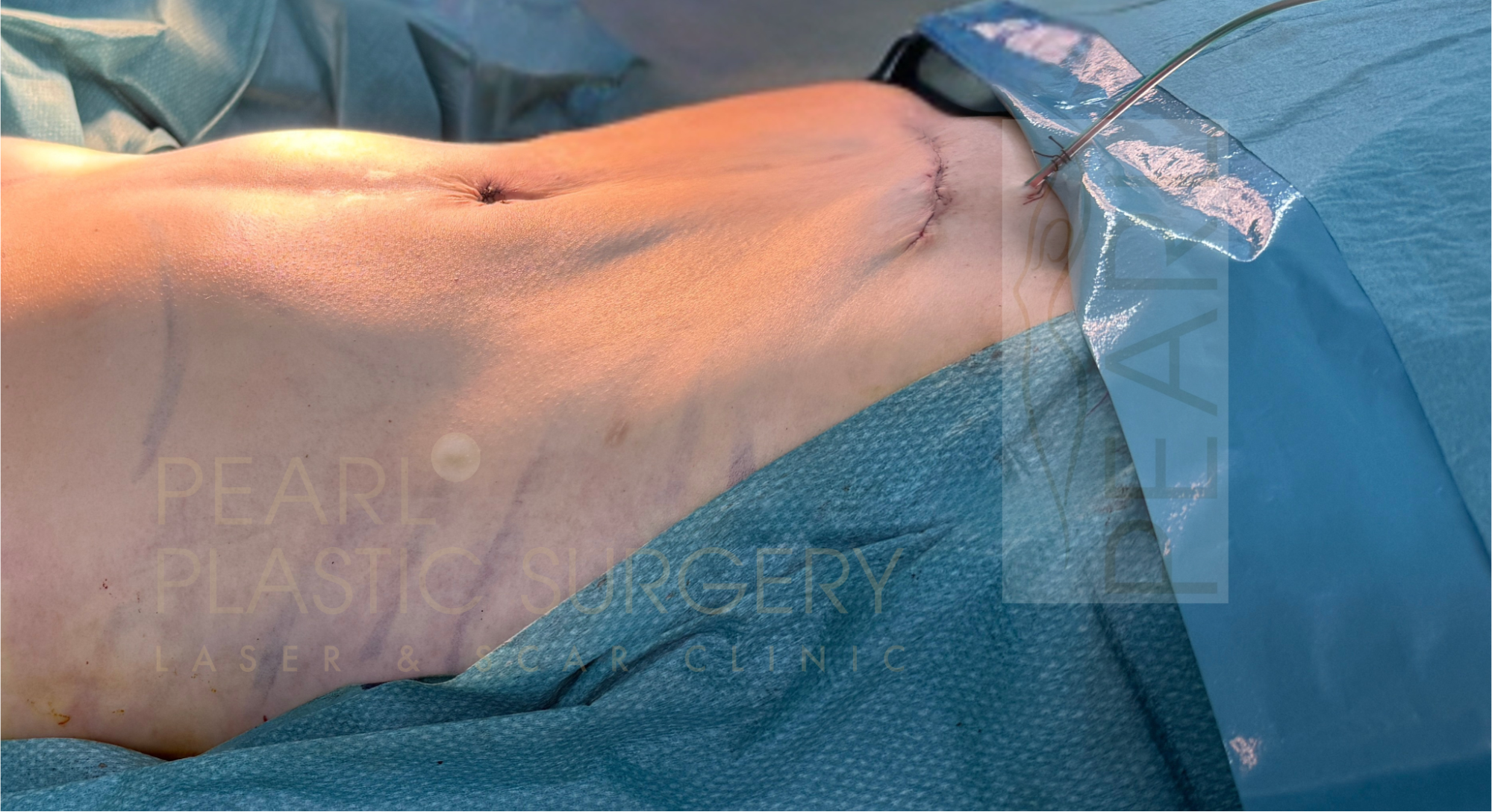
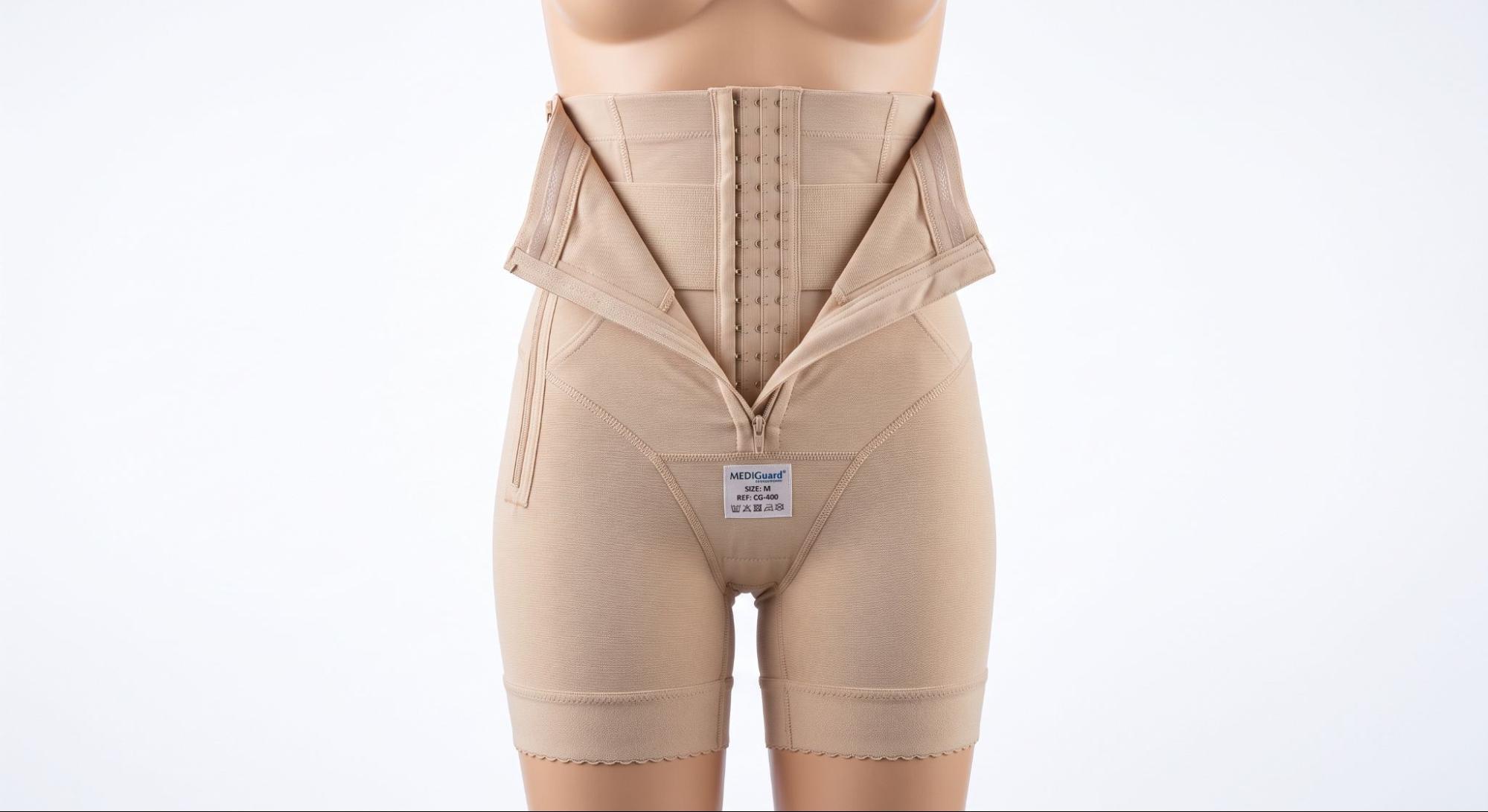
Gentle walking is usually encouraged as advised by the surgical team. Strenuous exercise, heavy lifting and movements that place tension on the incision should be avoided. A compression garment will be provided. If drains are used, instructions will be provided on their care and removal.
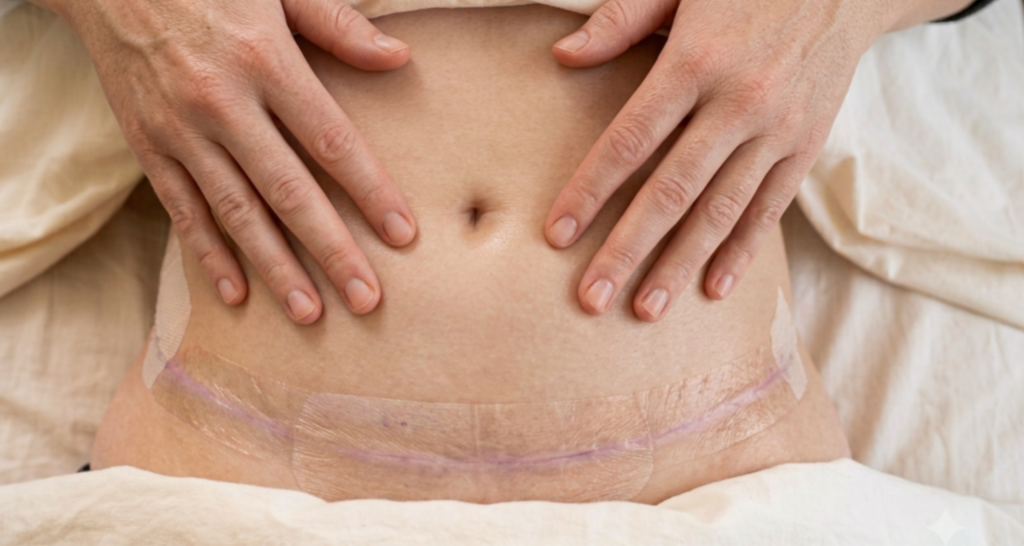
Dr Pearlie will also prescribe a regime of Manual Lymphatic Drainage performed by our therapist with or without LED light therapy to facilitate early resolution of swelling, reduce fibrosis promoting smoother healing and better results.
The following months
As healing progresses:
- Swelling gradually decreases
- Mobility improves
- The abdominal tissues begin to soften
- The contour becomes more apparent
- Scars continue to mature
Residual swelling and changes in sensation may persist for several months. Scar maturation can continue for a year or longer, and individual recovery timelines vary.
What are the risks of abdominoplasty?
As with any surgery, abdominoplasty carries potential risks and complications. These may include:
- Bleeding or haematoma
- Infection
- Fluid accumulation (seroma)
- Delayed or poor wound healing
- Unfavourable scarring
- Numbness or changes in skin sensation
- Asymmetry or contour irregularities
- Skin or fat tissue loss
- Persistent pain or swelling
- Blood clots in the legs or lungs
- Anaesthetic complications
- The need for further surgery
Certain factors, including smoking or nicotine use, medical conditions and previous abdominal surgery, may increase the risk of complications. The risks relevant to each patient will be discussed during consultation and before consent is obtained.
Will a tummy tuck remove stretch marks?
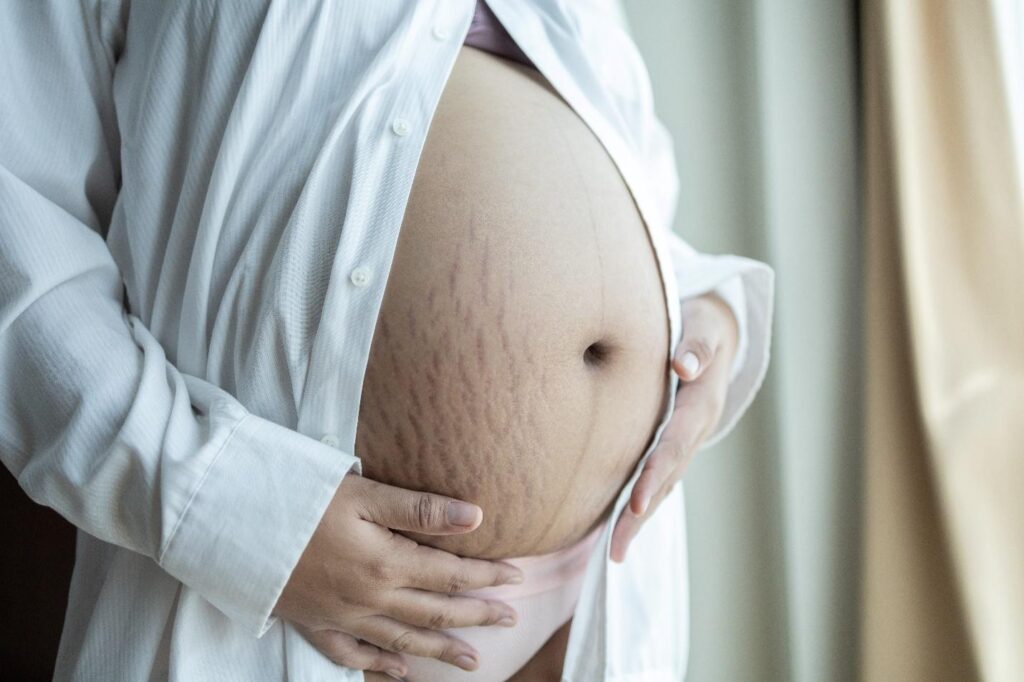
A tummy tuck is not specifically a treatment for stretch marks. However, stretch marks located within the skin that is removed will be removed along with it.
Stretch marks outside the excised area will remain. Those on the remaining abdominal skin may be repositioned, but any change in their appearance cannot be predicted reliably.
What results can abdominoplasty achieve?
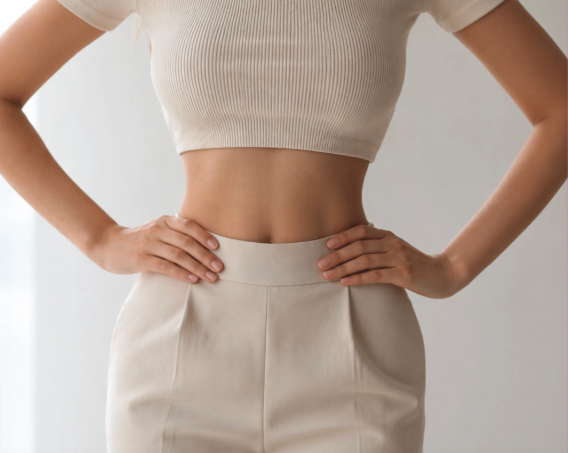
Abdominoplasty aims to improve the shape and proportion of the abdomen rather than reduce overall body weight. Depending on the individual’s anatomy and the extent of surgery, possible changes include:
- Less excess or overhanging abdominal skin
- Reduced skin folding in the lower abdomen
- A smoother abdominal contour
- Improved waistline definition
- More comfortable clothing fit
- Better balance between the abdomen and surrounding body contours
A permanent scar remains after surgery, with its position and length depending on the technique used and the amount of skin removed. Results vary between individuals and cannot be guaranteed.
Future pregnancy, significant weight changes and natural ageing may alter the abdominal contour over time.
Abdominoplasty (tummy tuck) in Singapore
Each abdomen is different. For some individuals, excess skin is the main concern. For others, abdominal wall laxity, fat distribution, previous surgery or pregnancy-related changes may also affect the contour.
During consultation, Dr Pearlie Tan will assess the skin, abdominal wall, existing scars, tissue distribution and overall body proportions. The consultation will also cover:
- Whether abdominoplasty may be suitable
- The most appropriate and ideal surgical approach
- The expected position and extent of scars
- Recovery and activity restrictions
- Potential risks and complications
- The degree of improvement that may reasonably be expected
If excess abdominal skin continues to affect your comfort or clothing fit, a consultation can help you better understand the available options.
Book an appointment to discuss whether abdominoplasty may be appropriate for you.
Frequently Asked Questions
What is the difference between liposuction and a tummy tuck?
Liposuction removes localised fat deposits but does not remove a significant amount of excess skin. A tummy tuck primarily removes excess skin and may also include tightening of the abdominal wall where indicated.
Some patients may benefit from combining the procedures when both localised fat and excess skin contribute to the abdominal contour. Suitability is determined after an individual assessment.
Can a tummy tuck repair separated abdominal muscles?
Rectus diastasis can occur alongside excess skin and may contribute to abdominal bulging or reduced abdominal wall support.
Where appropriate, the supporting layer over the abdominal muscles may be tightened during abdominoplasty. Not every patient requires this step, and suitability is determined through a clinical assessment.
Can exercise tighten loose abdominal skin?
Exercise can strengthen the abdominal muscles and help reduce body fat, but it cannot directly remove significantly stretched or redundant skin.
The ability of the skin to retract depends on factors such as age, genetics, skin quality and the degree of previous stretching.
How long does tummy tuck recovery take?
Recovery occurs in stages and varies according to the extent of surgery and the individual’s healing response. Some routine activities may be resumed within a few weeks, while strenuous exercise and heavy lifting usually require a longer period of restriction.
Swelling, scar maturation and tissue settling may continue for several months. Patients should follow their surgeon’s advice on returning to work, driving and physical activity.
Is a tummy tuck suitable after pregnancy?
Abdominoplasty may be considered after pregnancy when excess skin, abdominal wall laxity or contour changes remain after the body has recovered and weight has stabilised.
Patients planning another pregnancy may prefer to postpone surgery, as a future pregnancy can stretch the abdominal tissues and affect the result.
Can I undergo a tummy tuck after major weight loss?
Abdominoplasty is often the definitive option to restore normal abdominal contours after significant or massive weight loss, as excess abdominal skin often remains once weight has stabilised.
If loose skin extends around the flanks or lower back, a different or more extensive body-contouring procedure may be more appropriate.
Can a tummy tuck be combined with other procedures?
Yes, many patients pair abdominoplasty with rib remodelling for complete midsection reshaping. While a tummy tuck tightens muscle and removes loose skin, rib remodelling adjusts the lower floating ribs to narrow structural waist width. Combined, these procedures restore a pre-pregnancy waistline, improve clothing fit, and streamline recovery into a single surgery.
Is abdominoplasty covered by insurance or MediSave?
Abdominoplasty performed solely for aesthetic reasons is generally not covered by insurance or MediSave.
Coverage may differ when surgery is considered medically necessary and meets the applicable insurer or MediSave requirements. Patients should confirm their eligibility with the clinic and insurer before treatment.