
Integrated Body Contouring
(Weight Loss Injections + Sculpt)

Overview
Purpose | Plastic surgeon supervised weight management with proactive monitoring of the skin, muscle and body contours |
Recommended for | Suitable adults who meet the medical criteria for prescription weight-loss treatment and checked for any contra-indications. |
How it is given | Tiny injection beneath the skin according to the prescribed treatment schedule |
How the approach differs | Skin, soft-tissue and muscle mass changes are monitored during weight loss and addressed “on-the-go” instead of only after excessive lax skin develops. |
Treatment stages | Initiation, active weight loss, followed by weight stabilisation and final contour assessment |
Monitoring | Weight, body composition, nutrition, muscle preservation, skin quality and areas of developing laxity |
Possible complementary treatments | Collagen-stimulating treatments, Morpheus8, FaceTite, BodyTite, RFAL or surgical body contouring, depending on the patient |
Slim and strong, NOT thin and weak
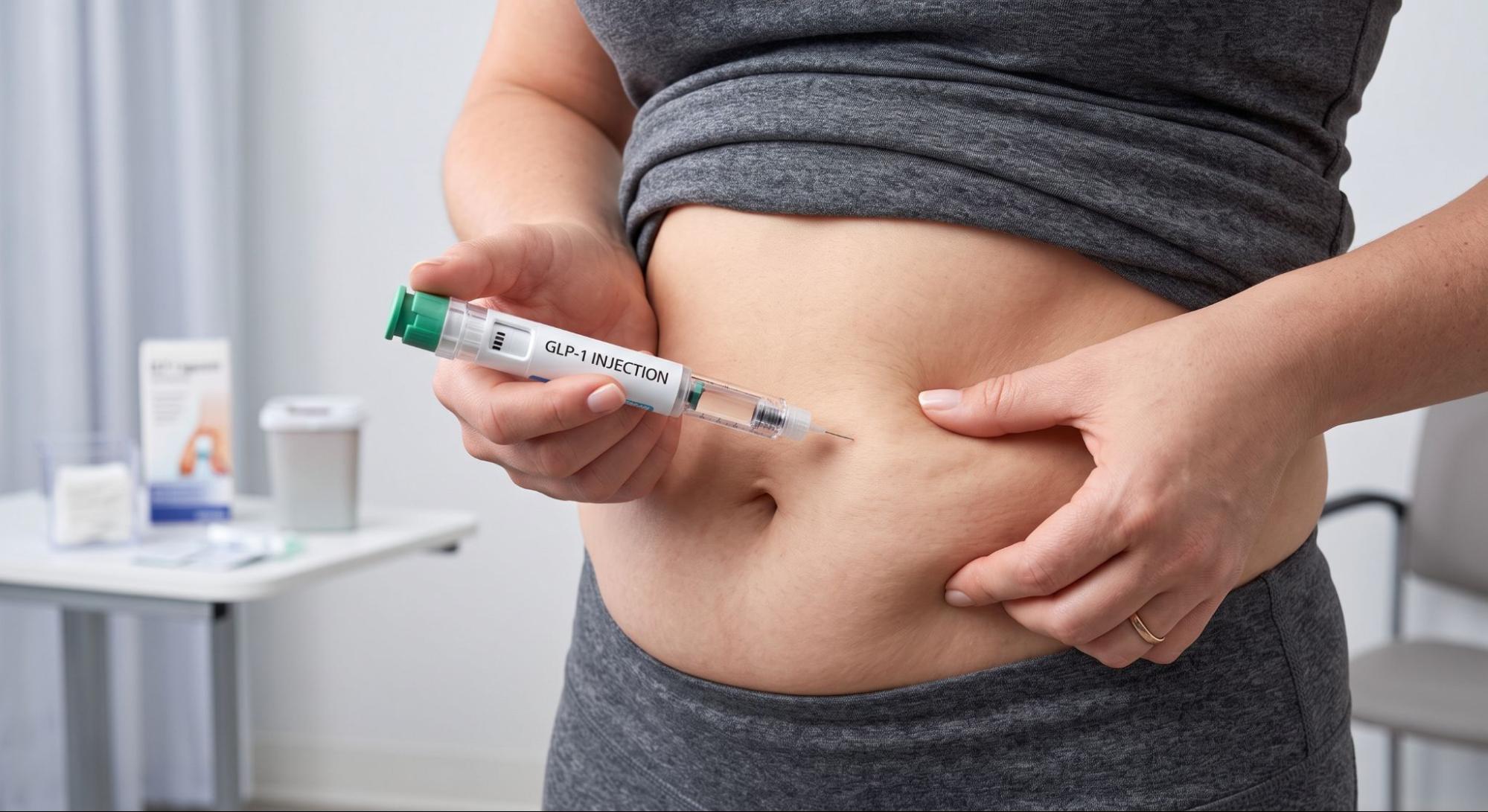
Most body-contouring treatments begin after weight loss has already taken place.
At Pearl Plastic Surgery, Dr Pearlie Tan takes a more integrated approach. For suitable patients, medically supervised GLP-1 injections are combined with ongoing assessment of muscle mass, skin quality and changing body contours.
Instead of waiting until excess skin has fully developed, areas of laxity are monitored throughout the weight-loss journey. Nutrition, muscle preservation and appropriately timed skin-tightening treatments may also be incorporated into the treatment plan.
The aim is not simply to reduce the number on the scale. It is to achieve healthy weight loss while preserving muscle strength, maintaining the best possible tissue quality, and planning ahead for a slimmer, stronger and more defined final body contour.
What are GLP-1 injections?
Although GLP-1 medications have attracted enormous attention in recent years for weight loss, GLP-1–based therapy itself is not new or experimental. The first GLP-1 receptor agonist was approved for the treatment of type 2 diabetes more than 20 years ago, and this class of medication has since been extensively studied and used in millions of patients worldwide.
What has changed is their role in weight management. Newer-generation medications such as semaglutide and tirzepatide are more specifically indicated and dosed for weight loss than earlier treatments, leading to their rapidly increasing use for overweight and obesity.
They act on appetite-regulating pathways in the body. Depending on the medication prescribed, treatment may help patients feel full earlier, remain satisfied for longer and reduce their overall food intake.
As their use becomes more widespread, the conversation is also evolving beyond simply “How much weight can I lose?” to “How can I lose weight well?” Healthy weight loss should aim to reduce excess fat while preserving muscle strength, maintaining the best possible skin and tissue quality, and ultimately achieving a slimmer, stronger and more defined body contour.
Why can skin become loose during weight loss?
As weight is lost, the layer of fat beneath the skin is also lost. The skin may not contract at the same rate, particularly when weight loss is rapid or significant.
Patients may notice:
- Loose or crepey skin
- Reduced facial volume
- A hollow or tired facial appearance
- Deflation of the breasts
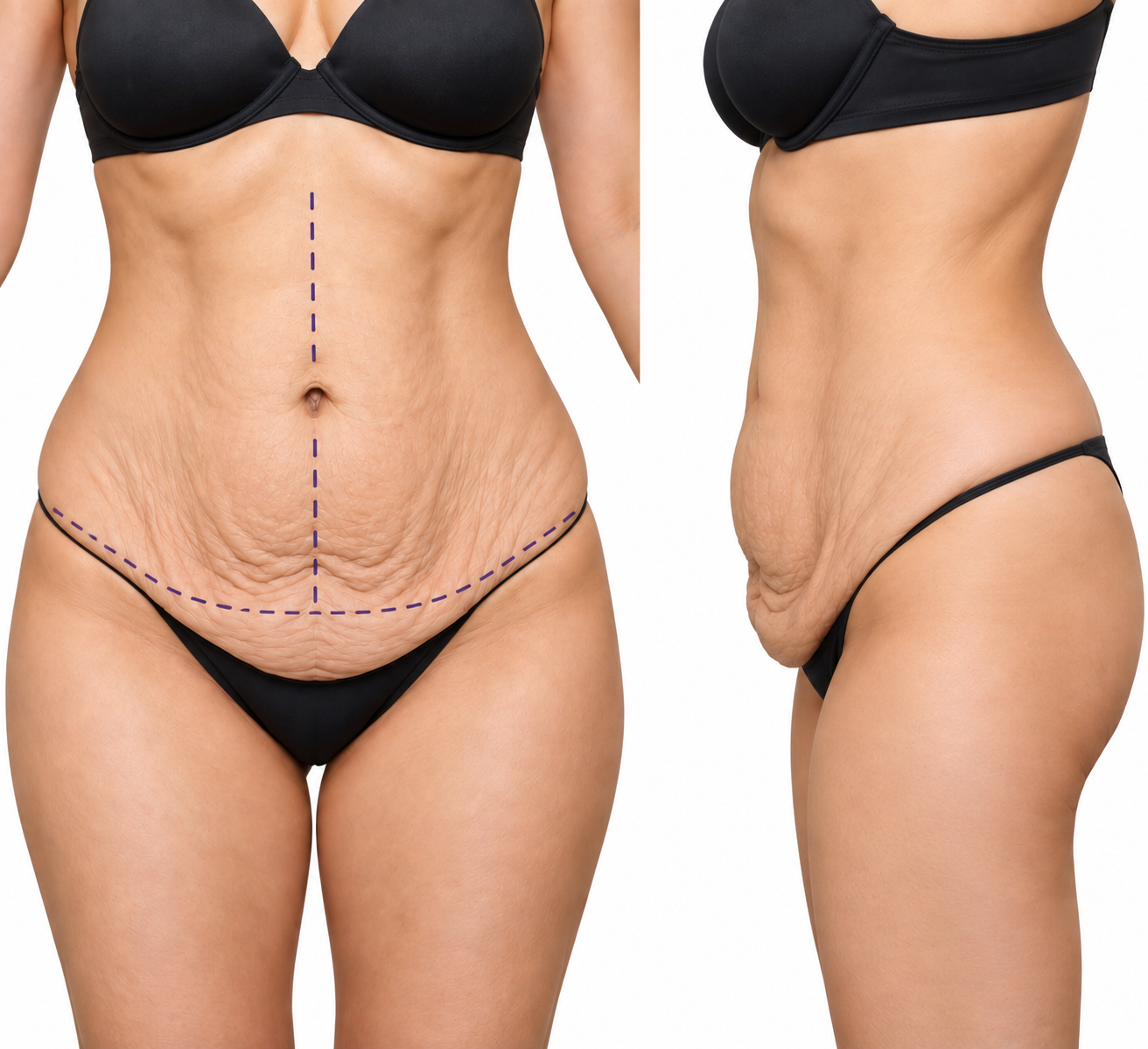
- Loose abdominal skin
- Upper-arm “bat wings”
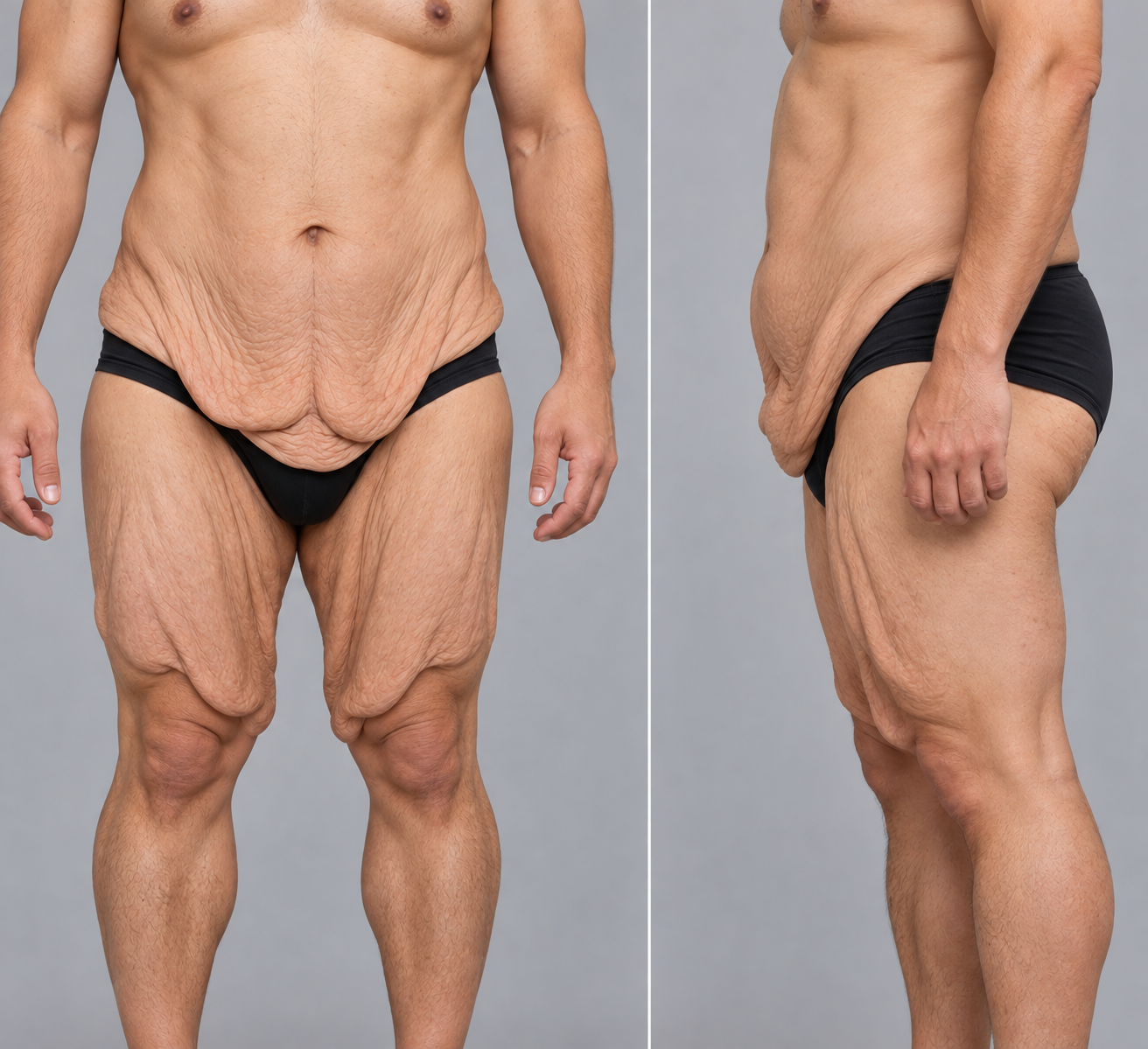
- Laxity over the inner thighs
- Reduced muscle definition
- A smaller but softer-looking body contour
How well the skin contracts depends on several factors, including age, genetics, natural skin elasticity, previous pregnancies, repeated changes in weight, sun exposure and the amount and rate of weight loss. Loss of muscle mass can also make the face and body appear more deflated.
How is Pearl Plastic Surgery’s approach different?
Conventional post-weight-loss contouring often begins only after the patient has reached the target weight. By then, areas of skin laxity and tissue deflation may already be established.
Dr Pearlie’s approach begins earlier. Before and during weight loss, she assesses the areas most likely to develop laxity and monitors how the patient’s skin, muscle mass and body shape are responding. Aside from loose skin, she will also emphasise and remind patients to be mindful of loss of lean mass/sarcopenia and nutritional deficiencies. What is often discussed as “GLP-1 side effects” are often consequences of substantial weight loss, inadequate protein/micronutrient intake, or loss of both fat and lean mass rather than direct toxic effects of the drug.
She focuses on four areas:
Monitoring More Than Weight | The number on the scale does not show whether a patient is losing fat, muscle or both. Regular reviews include:
Clinical photographs may also be taken with the patient’s consent to document changes over time. |
Preserving Lean Muscle | If muscle is lost together with fat, the body may appear softer or more deflated. Reduced muscle volume can also make loose skin more noticeable. The treatment plan therefore places importance on:
The objective is to reduce excess fat while preserving as much lean muscle as possible. |
Managing Skin Changes as They Develop | Patients do not necessarily need to wait until the end of weight loss before discussing their skin. Where appropriate, collagen-stimulating, skin-regeneration or energy-based treatments may be considered during the weight-loss journey. Treatment may focus on areas beginning to show laxity, such as the face, neck, abdomen, arms or thighs. These treatments may support skin quality and improve mild-to-moderate laxity. However, they cannot guarantee that loose skin will be prevented, particularly after significant weight loss. |
Planning the Final Contour | Following a patient throughout weight loss allows Dr Pearlie to understand how the skin and underlying tissues are changing. Once the weight has stabilised, she can determine whether the remaining concern is:
The final treatment can then be selected according to the actual concern rather than applying the same solution to every patient. |
The three phases of the “tighten as you lose” programme

Phase 1: Initiation
The first phase focuses on determining medical suitability, introducing treatment gradually and establishing a baseline for future comparison.
This may include:
- Medical-history and medication review
- Assessment of eligibility for GLP-1 injections
- Weight, BMI and body-composition measurements
- Baseline assessment of the skin and soft tissues
- Identification of areas more prone to laxity
- Clinical photography with consent
- Gradual adjustment of the prescribed dose
- Monitoring for side effects
- Nutrition and protein-intake guidance
- Introduction of resistance exercise where appropriate
The purpose of early treatment is not to promise that loose skin can be prevented. It is to support skin quality and begin managing changes before they become more advanced.
Phase 2: Active Weight Loss
Approximately Months 3–9
During active weight loss, changes in facial volume, skin laxity and body shape may become more noticeable.
Regular reviews may assess:
- Whether weight loss is progressing at an appropriate rate
- Whether nutrition remains adequate
- Whether lean muscle is being preserved
- Changes in facial fullness
- Skin contraction and elasticity
- Areas where laxity is becoming more visible
- Whether the medical or aesthetic treatment plan should be adjusted
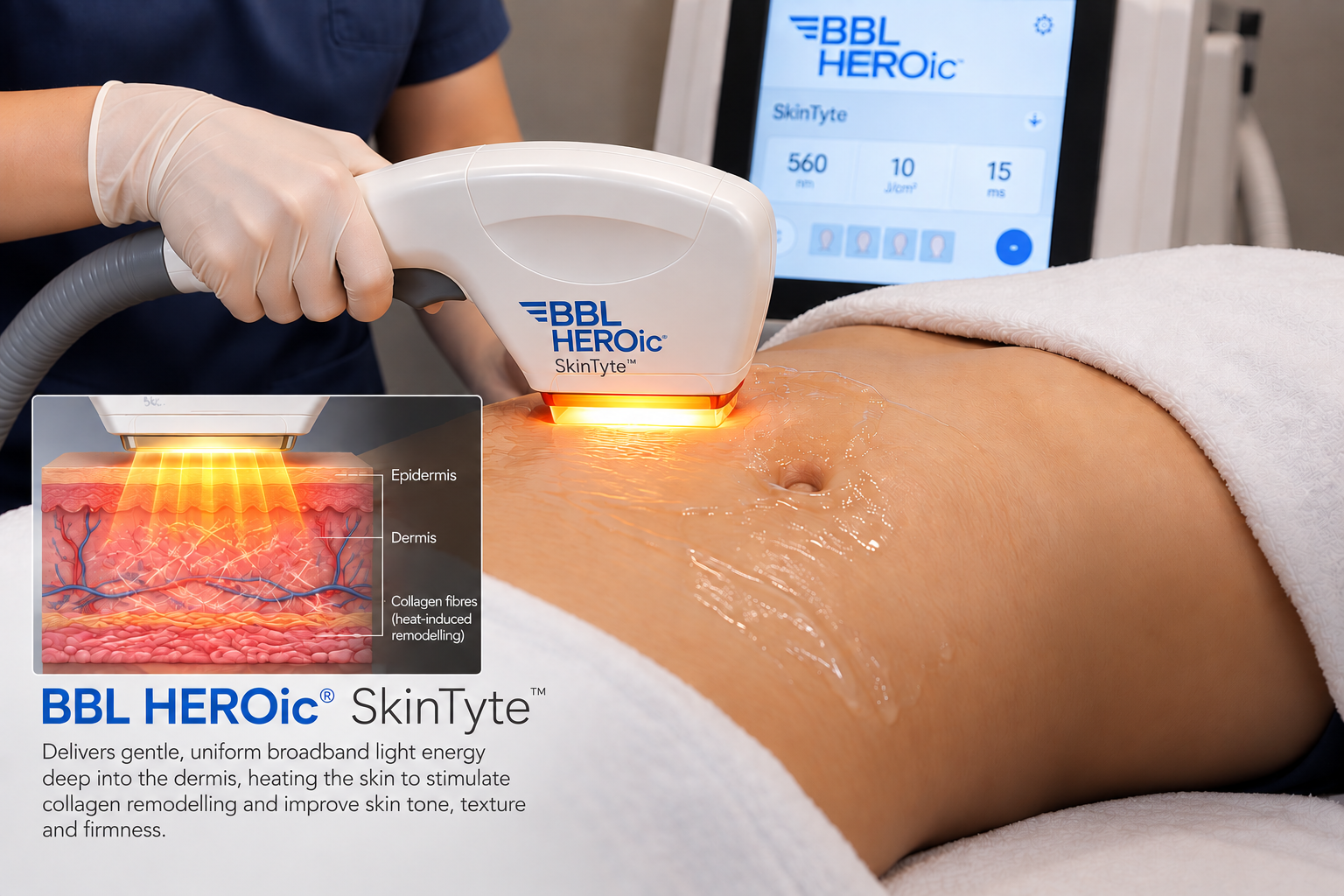
Depending on the individual patient, maintenance skin or collagen treatments may be performed. Areas such as the abdomen, inner thighs, upper arms, face and neck can be treated selectively according to how they are responding.
Suitable treatments may include:
- Morpheus8 radiofrequency microneedling
- Skin-regeneration treatments
- Collagen-stimulating injectables
Not every patient requires treatment during active weight loss. Timing is individualised to avoid unnecessary or premature procedures.
Phase 3: Weight Plateau and Maintenance
Once the patient has reached or approached the target weight, the focus shifts from active weight loss to maintenance and final contour assessment.
Dr Pearlie will evaluate:
- Whether the weight is sufficiently stable
- The amount and location of any remaining fat
- The severity of loose or hanging skin
- Facial or breast-volume loss
- Muscle definition and overall body proportion
- Whether nutrition is adequate for healing
Patients with limited laxity may continue with non-surgical treatments. Conversely, patients with significant redundant skin may achieve a more meaningful improvement through surgery, such as:
- Abdominoplasty or “tummy tuck”
- Brachioplasty for upper-arm laxity
- Thigh-reduction surgery
- Breast lifting or reshaping
- Facial lifting or volume restoration
- Other post-weight-loss body-contouring procedures
Why begin skin assessment early?
Early assessment provides a reference point from which the patient’s changing tissues can be monitored. It allows Dr Pearlie to:
- Identify areas at greater risk of laxity
- Observe how well the skin is contracting
- Monitor facial and body-volume changes
- Identify excessive muscle loss
- Adjust the treatment strategy as weight loss progresses
- Introduce selected treatments at an appropriate stage
- Plan ahead if surgery may be required
- Avoid treatments that are unnecessary or premature
This continuity distinguishes the programme from receiving weight-loss treatment in one clinic and seeking body contouring elsewhere only after the weight has been lost.
Who may be eligible?
GLP-1 injections may generally be considered for adults who:
- Have obesity based on their body mass index
- Are overweight and have a weight-related medical condition
- Have found it difficult to achieve or maintain sufficient weight loss through lifestyle measures alone
- Are prepared to follow an appropriate nutrition and physical-activity programme
- Are willing to attend regular medical and body-composition reviews
- Understand that treatment requires ongoing monitoring
- Have realistic expectations about weight loss and skin tightening
Weight-related conditions may include high blood pressure, abnormal cholesterol levels, obstructive sleep apnoea or type 2 diabetes.
It’s important to note that eligibility cannot be determined from BMI alone. Dr Pearlie will also review the patient’s health, medical history, current medications, previous weight changes, body composition and treatment goals.
What to expect
Your First Consultation
During your consultation, Dr Pearlie will discuss:
- Your health and medical history
- Current medications and supplements
- Previous weight-loss attempts
- Weight-related medical conditions
- Current weight and body composition
- Existing areas of loose skin or contour concern
- Facial and body aesthetic goals
- Whether GLP-1 treatment may be suitable
- Whether any skin treatment should begin early or be reviewed later
A personalised treatment roadmap can then be developed to help you achieve your goals. The goal is “Slim and strong, NOT thin and weak”.
Starting Treatment
GLP-1 medications are established prescription medicines with extensive clinical experience, but they are not risk-free and require appropriate patient selection, dose escalation and medical monitoring.
Treatment generally begins conservatively. The dose may be adjusted gradually according to the medication prescribed, your response and any side effects.
Patients should follow the dosing instructions provided by their treating doctor and should not change the dose themselves.
During Active Weight Loss
Follow-up appointments may include:
- Weight and body-composition measurements
- Review of appetite and eating patterns
- Assessment of treatment response and side effects
- Nutrition and protein review
- Muscle-mass monitoring
- Examination of the face, skin and body contours
- Adjustment of the medical or aesthetic treatment plan
Not every part of the body will change at the same rate. Some patients notice facial-volume loss early, while others first develop laxity around the abdomen, arms or thighs. Regular assessment allows treatment to focus on the areas requiring attention rather than following a fixed package.
After Reaching Your Target Weight
Once the patient’s weight is stable, Dr Pearlie will assess what has improved naturally and what remains.
The final contouring plan may involve:
- No additional treatment
- Continued non-surgical skin treatment
- Minimally invasive contouring
- Surgical removal of excess skin
- A staged combination of treatments
What results can you expect?
The amount and rate of weight loss vary between patients. Results depend on the patient’s starting weight, body composition, medical conditions, prescribed treatment, nutrition, physical activity and adherence to the programme.
The “tighten as you lose” approach cannot guarantee that loose skin will be prevented. Its purpose is to:
- Monitor skin and soft-tissue changes from the beginning
- Support lean-muscle preservation
- Maintain attention to nutrition and tissue quality
- Address limited laxity where appropriate
- Plan the timing of future treatment
- Select the most suitable contouring option once weight stabilises
Non-surgical treatments are generally most suitable for mild-to-moderate laxity. They cannot replace surgical excision when a substantial amount of loose or hanging skin is present.
A medical body-contouring journey under one surgeon
The effects of weight loss on the skin should not be an afterthought.
By combining medical weight management with ongoing assessment of muscle mass, skin quality and body contours, Dr Pearlie can follow the patient from the beginning of weight loss through to final aesthetic refinement. Schedule an appointment today for a detailed diagnosis and personalised weight loss plan.
Frequently Asked Questions
How is this different from a standard medical weight-loss programme?
The programme considers both weight loss and its effects on the skin, muscles and body contours. These changes are monitored throughout the journey, allowing skin treatments and final body-contouring procedures to be planned and timed appropriately.
GLP-1 medications are established prescription medicines with extensive clinical experience, but they are not risk-free and require appropriate patient selection, dose escalation and medical monitoring.
Can the programme prevent excess skin?
No treatment can guarantee that excess skin will be prevented. The amount of laxity depends on the extent of weight loss, age, genetics and skin elasticity. Early intervention may support skin quality or improve limited laxity, but significant excess skin may still require surgery.
Why is body-composition monitoring important?
A standard scale cannot distinguish between fat loss and muscle loss. Monitoring body composition helps determine whether lean muscle is being preserved as weight decreases.
Why is protein intake important?
Adequate protein supports muscle preservation and general nutrition. This is particularly important when appetite is substantially reduced.
Individual dietary requirements should be discussed with the treating clinician or an appropriate nutrition professional.
When can skin-tightening treatment begin?
Some treatments may be considered during active weight loss, while others are more appropriately performed after the weight has stabilised. Timing depends on the area, degree of laxity, anticipated amount of further weight loss and patient goals.
Will I need surgery after losing weight?
Not necessarily. Patients with good skin elasticity may need little or no additional treatment. Mild-to-moderate laxity may be treated non-surgically or with a minimally invasive procedure. Significant hanging skin generally requires surgical excision for a meaningful correction.
Can GLP-1 injections target a particular area?
No. They support overall weight loss and cannot be targeted to any specific area.
How quickly will I lose weight?
There is no fixed rate. Weight loss varies according to the patient, medication, dose, nutrition, exercise intensity/frequency and medical circumstances. Treatment is monitored and adjusted according to safety and response.
What happens if I stop treatment?
While patients may regain some weight after discontinuing treatment, studies show that most do not return to their initial baseline weight. Furthermore, many patients successfully adopt meaningful lifestyle modifications i.e. regular exercise routines and tailored dietary habits that support their long-term health and strength. To sustain these benefits, a comprehensive maintenance plan incorporating nutrition, physical activity, and routine medical follow-ups is essential. Patients should always consult their prescribing doctor before stopping or adjusting their medication.
When can body-contouring surgery be considered?
Surgery is generally considered after the patient has reached or approached the target weight, maintained a sufficiently stable weight and achieved adequate nutritional health for healing.