
Correction ofInverted Nipples

Overview
Purpose | Restoring nipple projection by correcting inward tethering of the nipple while preserving nipple appearance, sensation and function where possible. |
Recommended for | Individuals with inverted nipples that do not remain everted with stimulation, particularly when associated with breastfeeding difficulties, hygiene concerns, asymmetry or aesthetic dissatisfaction. |
Surgery time | Approximately 30–60 minutes, depending on the severity of inversion and the surgical technique used. |
Hospital stay | Usually performed as a day procedure under local anaesthesia or sedation, with no overnight hospital stay required in most cases. |
Recovery | Return to light activities is generally possible within a few days. Temporary swelling, tenderness and protective dressings may be expected during the initial healing period. Follow-up appointments are required to monitor healing and maintain nipple projection. |
Inverted nipples, sometimes referred to as nipple retraction, are a common anatomical variation where the nipple is drawn inward instead of projecting outward. While the condition is often harmless, some individuals experience functional difficulties, recurrent irritation or dissatisfaction with appearance. Modern corrective nipple inversion surgery techniques allow treatment to be tailored to the degree of inversion, underlying cause and individual goals. This helps to restore nipple projection while preserving natural structure where possible.
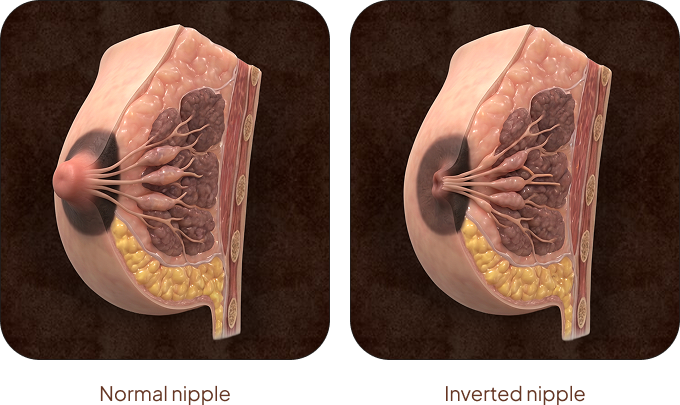
Grades of inverted nipples
Understanding the grade of nipple inversion is important, as it helps determine whether non-surgical measures may be suitable or whether surgical correction is more likely to be recommended. Grade 1 (Mild inversion) — The nipple can be easily pulled outward and may remain projected for a period of time before retracting. Milk ducts are usually unaffected, and breastfeeding is often possible. Grade 2 (Moderate inversion) — The nipple can be manually everted but tends to retract quickly once released. There is often moderate shortening of the milk ducts or fibrous tissue beneath the nipple. Grade 3 (Severe Inversion) — The nipple remains persistently inverted and cannot be easily pulled outward. Significant shortening of the milk ducts and fibrous tethering are typically present. Individuals may experience difficulties with hygiene, recurrent irritation or breastfeeding.| Grade | Characteristics | Breastfeeding potential |
| Grade 1 | Easily everted and may remain projected temporarily | Usually preserved |
| Grade 2 | Can be pulled out but retracts quickly | May be affected |
| Grade 3 | Persistently inverted and difficult to evert | More likely to be affected |
What causes inverted nipples?
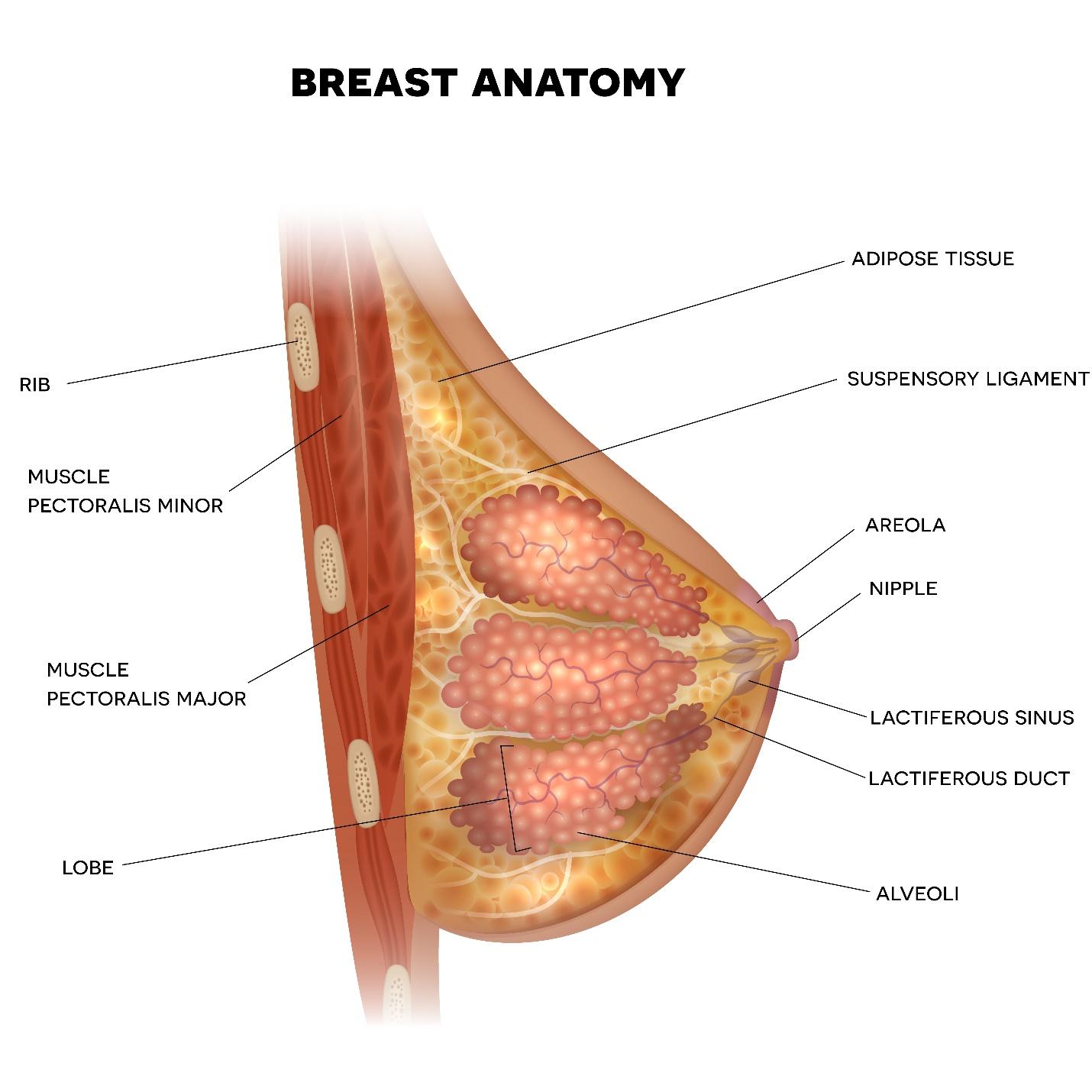
Inverted nipples develop when internal structures pull the nipple inward instead of allowing it to project outward. This inward traction may be present from birth or develop over time due to:
- Congenital shortening of milk ducts or fibrous bands – some individuals are born with ducts or connective tissue that are shorter or tighter than normal. These structures act as internal anchors, pulling the nipple inward and preventing sustained outward projection.
- Fibrous tissue tethering beneath the nipple – dense fibrous bands beneath the nipple can restrict its mobility. Over time, persistent tension from these tissues draws the nipple inward, particularly in moderate to severe inversion.
- Scarring from previous surgery or trauma – procedures such as breast surgery, biopsies, piercings or trauma can lead to scar formation. As scar tissue matures and contracts, it may gradually pull the nipple inward, even if it was previously everted.
- Post-pregnancy or breastfeeding changes – repeated stretching and regression of milk ducts during pregnancy and breastfeeding can result in duct shortening or fibrosis after lactation. This residual tension may contribute to nipple inversion as the breast tissue involutes.
- Chronic inflammation or recurrent infection – ongoing inflammation around the nipple can lead to tissue thickening and fibrosis. As healing occurs, contracture of this tissue may create inward traction over time.
- Loss of structural support with ageing – age-related changes in connective tissue strength and elasticity may reduce nipple support. This allows underlying fibrous forces to dominate, leading to gradual nipple retraction.
- Underlying breast conditions – in rare cases, new or progressive nipple inversion may be linked to underlying breast pathology. This is more concerning when inversion is unilateral or associated with skin changes, discharge or a lump, and warrants prompt medical evaluation.
Do inverted nipples cause problems or complications?
Not all inverted nipples require correction. However, treatment may be considered when inversion leads to:
- Difficulty with breastfeeding or milk flow
- Recurrent discharge, irritation or infection
- Challenges with hygiene
- Altered nipple sensation
- Emotional distress or reduced self-confidence
However, sudden nipple inversion, especially when accompanied by skin changes or discharge, should always be assessed medically.

Who can consider inverted
nipple correction?
Correction may be suitable for individuals who:
- Have persistent nipple inversion that does not resolve with stimulation
- Experience functional concerns such as breastfeeding difficulty
- Notice the asymmetry between nipples
- Feel self-conscious about nipple appearance
- Prefer a long-term corrective option
What are the benefits of
inverted nipple correction surgery?
Inverted nipple correction may offer both functional and aesthetic benefits, depending on the severity of the inversion and the individual’s concerns. Potential benefits include:
- Restores nipple projection — The procedure helps release the structures pulling the nipple inward, allowing it to project outward more naturally and improving the overall appearance of the nipple.
- Improves nipple symmetry — For individuals with one-sided inversion or noticeable asymmetry, correction may help create a more balanced appearance between both nipples.
- Facilitates easier hygiene — Persistent nipple inversion can create folds where moisture, debris or secretions may accumulate. Correction may make the area easier to keep clean and maintain hygiene.
- Reduces irritation and recurrent infections — Some individuals experience recurring irritation, inflammation or infections associated with deep nipple inversion. Correcting the inversion may help reduce these issues.
- Supports breastfeeding function in selected cases — Depending on the degree of inversion and the surgical technique used, correction may improve nipple accessibility for breastfeeding. Preservation of the milk ducts (whenever possible) will be discussed during consultation.
- Enhances confidence and comfort — Many individuals seek treatment because they feel self-conscious about the appearance of inverted nipples. Correction may improve comfort with body image and clothing choices.
How are inverted nipples corrected in Singapore?

The technique focuses on restoring outward projection while preserving nipple sensitivity, function and natural appearance. It is highly dependent on the degree of inversion, underlying cause and individual goals, particularly whether future breastfeeding is a consideration.
Some of the possible approaches are:
Surgical correction for inverted nipples
Surgical correction is the most reliable option for moderate to severe inversion. Inverted nipple correction surgery aims to restore nipple projection while preserving nipple appearance, sensation and function where possible. The procedure focuses on:
- Releasing fibrous bands tethering the nipple
- Supporting the nipple in an everted position
- Preserving milk ducts if feasible
The approach is customised to balance the durability of correction with functional preservation. Procedures are typically performed under local anaesthesia or as day surgery, depending on complexity.
What to expect after inverted nipple correction
Following correction, most patients experience mild swelling or tenderness that settles within days. Protective dressings or splints may be used temporarily to maintain nipple projection during early healing.
The typical recovery milestones include:
- Return to light activities within a few days
- Gradual resolution of swelling over 1 to 2 weeks
- Continued tissue stabilisation over several weeks
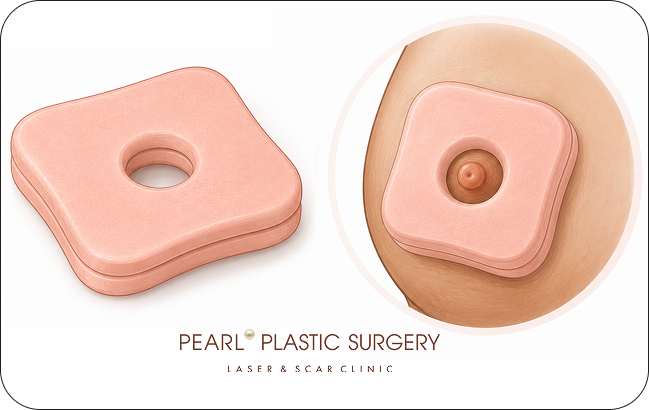
Post-treatment care and aftercare guidance
Aftercare plays a key role in preserving outcomes. Our surgeon will provide you with clear instructions to support safe healing, which entail:
- Keeping the area clean and dry
- Avoiding pressure or friction on the nipples
- Wearing recommended protective dressings if advised
- Attending scheduled follow-up appointments
What is the cost of inverted nipple correction in Singapore?
The cost of inverted nipple correction in Singapore typically starts from $2,000, depending on the complexity of the procedure and the treatment approach recommended by your surgeon.
Factors that may affect the overall cost include:
- The severity or grade of nipple inversion
- Whether one or both nipples require correction
- The surgical technique used
- Operating facility and day surgery fees
- Pre-operative assessments and post-operative follow-up care
As every case is different, a personalised consultation is recommended to assess your condition and provide an accurate quotation based on your individual needs.
Book a personalised consultation
Living with inverted nipples can affect comfort and your confidence. You are not alone and help is available.
Scheduling an appointment is a positive first step toward clarity and support. Our team is here to guide you with care and discretion.

Frequently Asked Questions
Is inverted nipple correction considered cosmetic or medical?
In most cases, inverted nipple correction is classified as a cosmetic procedure. However, if inversion leads to functional issues such as recurrent infections or breastfeeding difficulties, this could be a medical problem and will be discussed during consultation.
Is the procedure painful?
Discomfort is usually mild and well-controlled with simple pain relief.
Can only one nipple be corrected?
Yes, correction can be performed on one or both nipples, depending on individual needs.
Is inverted nipple correction permanent?
Depending on the surgical technique used, surgical correction can offer long-lasting improvement, particularly for moderate to severe inversion. Mild cases managed non-surgically require ongoing maintenance.
Will correction affect breastfeeding?
Techniques aim to preserve milk ducts when possible. However, breastfeeding potential depends on the degree of inversion and surgical approach, which will be discussed during consultation.
Will there be visible scars?
Incisions are small and placed discreetly. Scars typically heal well and become less noticeable over time.
Is inverted nipple correction medically necessary?
Correction is often elective but may be recommended when functional issues or recurrent infections occur.
When should nipple inversion be investigated urgently?
New, sudden inversion, especially with discharge, skin changes or a lump, should be assessed promptly.
What factors affect the price of inverted nipple correction surgery?
Several factors influence the overall cost, including:
- Severity of inversion
- One or both nipples require correction
- Surgical technique used.
- Type of anaesthesia used (local or sedation)
Each treatment plan is tailored to the individual, which is why costs are assessed on a case-by-case basis.