
LED Light Therapy for Rejuvenation and Post-Procedure Recovery in Singapore

Overview
Purpose | Supports skin healing, tissue repair and recovery following selected surgical and aesthetic procedures. |
Recommended for | Patients undergoing plastic surgery, laser treatments, microneedling and other procedures where LED light will complement treatment and support recovery. |
Treatment type | Non-invasive light-based therapy using specific LED wavelengths to support cellular activity and tissue repair. |
Session time | Approximately 15–30 minutes, depending on the treatment area and protocol. |
Downtime | There is no downtime with LED light therapy alone. |
Treatment course | The number and timing of sessions depend on the procedure performed, your stage of healing and individual recovery needs. |
Immediately after plastic surgery or aesthetic procedures, there will be a period of inflammation, redness and swelling. LED Light Therapy is a non-invasive treatment that may be incorporated into post-procedure recovery plans to complement certain treatments and in some cases, support the body’s natural healing processes, reduce inflammation and boost tissue repair.
Unlike lasers and other energy-based treatments that work by creating controlled tissue injury, LED Light Therapy delivers carefully selected wavelengths of low to high levels of light energy i.e. Red light (~630–660nm), Near-Infra Red (NIR) Light (~ 830–850nm and is beyond the visible spectrum and is invisible to the human eye) and Blue light (~415nm), that are absorbed by skin cells without generating significant heat or tissue damage.
Different wavelengths penetrate to varying depths within the skin and help support tissue repair, reduce inflammation and encourage cellular activity involved in healing and recovery. Because the treatment is gentle and requires little to no downtime, it is commonly incorporated into post-operative and post-procedure recovery programmes, while also being used as a standalone treatment for selected skin concerns.
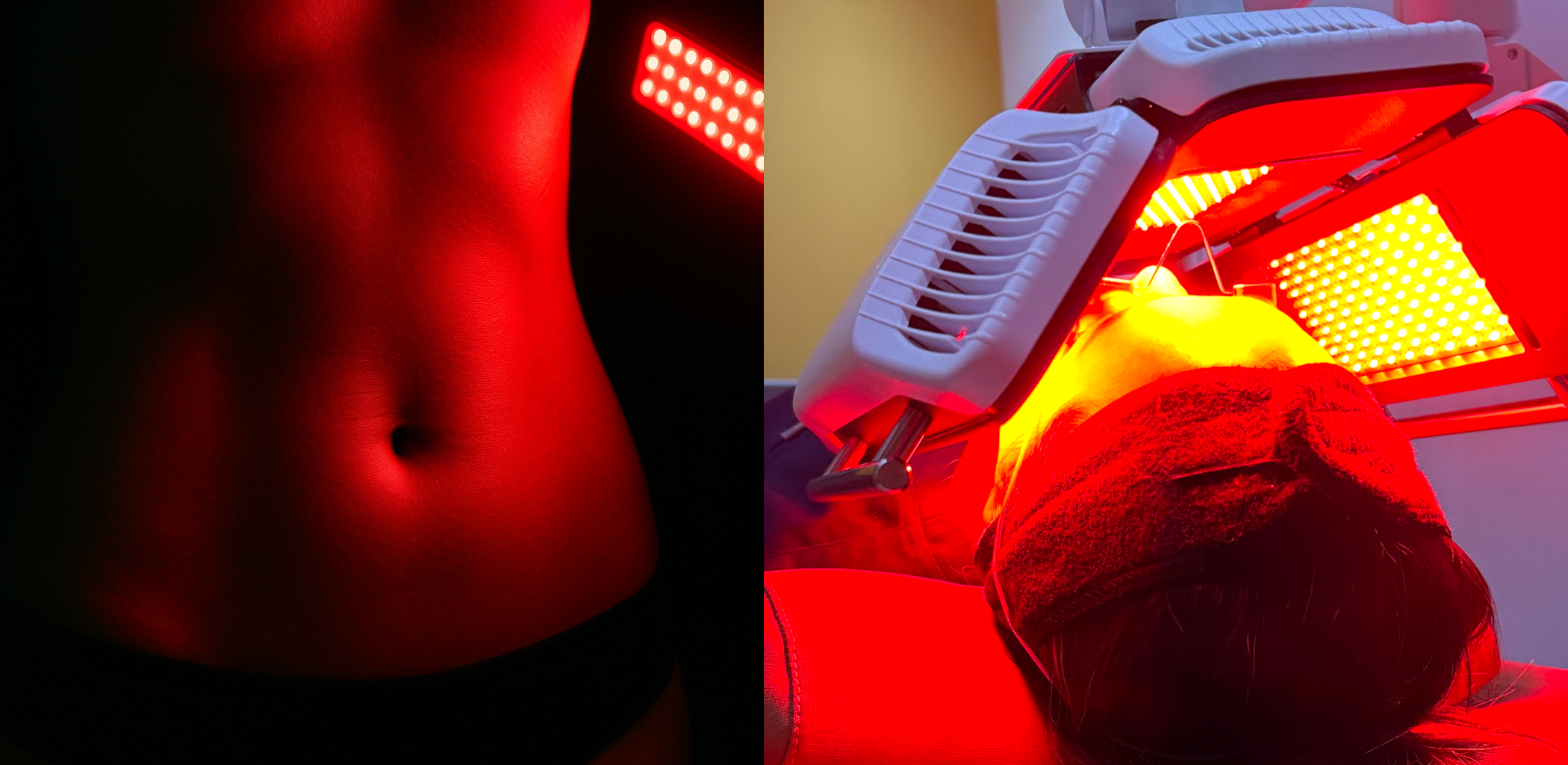
How does LED light therapy work?
When light energy reaches the skin, it is absorbed by different cellular targets and structures like mitochondria or cytochrome c oxidase (CcO). These structures help produce cellular energy, which is required for normal tissue repair and regeneration.
The biological effects include:
- Increased cellular energy production – supports normal cellular function and tissue recovery.
- Reduction of inflammation – calm irritated tissues and reduce redness.
- Improved circulation – supports the delivery of oxygen and nutrients to healing tissues.
- Stimulation of collagen production – encourages skin repair and structural support.
- Support for wound healing – assists the body’s natural healing processes following injury or procedures.
- Recovery optimisation – help reduce recovery-related discomfort and support tissue regeneration.
Because different wavelengths elicit distinct biological responses, treatment protocols are customised to the clinical concern being addressed.
What are the different colours of LED light therapy?
Different wavelengths of LED light penetrate the skin at different depths and interact with tissues in unique ways. As a result, each colour is associated with different therapeutic effects and may be selected according to the patient’s skin concerns, treatment goals and stage of recovery.
LIGHT COLOUR | DEPTH OF PENETRATION | COMMON USE |
Blue Light (approximately 415nm) | Superficial epidermis | Commonly used for acne-prone skin and blemish management. Helps eradicate acne-causing bacteria on the skin surface i.e. Cutibacterium acnes, which was formerly known as Propionibacterium acnes (P acnes). |
Yellow Light (approximately 590nm) | Superficial to mid-dermis | May help reduce redness, calm irritated skin and support recovery in sensitive skin conditions. |
Red Light (approximately 630–660nm) | Mid-dermis | Supports collagen production, tissue repair, skin renewal and rejuvenation following aesthetic procedures. |
Near-Infrared Light (approximately 830–850nm) | Deep dermis and underlying soft tissues | Penetrates deeper tissues to decrease inflammation, reduce pain, support wound healing and recovery. |
Why does LED penetration depth matter?
Different skin concerns originate at different tissue levels. Surface concerns such as acne and redness may respond to wavelengths that act closer to the skin surface, while recovery, wound healing and tissue repair often benefit from deeper-penetrating wavelengths that can reach structures beneath the skin.
For this reason, LED light therapy protocols frequently combine multiple wavelengths to target different layers of tissue simultaneously and optimise treatment outcomes.
What are the benefits of LED light therapy?
Benefits include:
- Supporting the body’s natural healing processes
- Reducing inflammation and redness
- Promoting tissue repair and recovery
- Encouraging collagen production
- Improving overall skin quality and rejuvenation
- Supporting recovery following selected surgical and aesthetic procedures
- Helping optimise the healing environment during recovery
Medical-grade LED devices vs Home LED devices
Feature | Medical-grade LED light therapy | Home LED devices |
Treatment setting | Performed in a medical clinic | Self-administered at home |
Treatment plan | Tailored to the patient’s skin condition, recovery stage and treatment goals | Generalised use following manufacturer instructions |
Clinical supervision | Performed or recommended by a medical professional | No direct medical supervision |
Common uses | Post-procedure recovery, wound healing support, scar management and skin rejuvenation | Maintenance of general skin health and mild cosmetic concerns |
Light output | Higher-powered, medical-grade devices designed for clinical use | Generally low-powered consumer devices |
Treatment protocols | Individualised according to the procedure and stage of healing | Fixed settings with limited customisation |
Although both use LED light, medical-grade LED devices allow treatment protocols to be tailored according to the patient’s skin condition, stage of healing and clinical goals. At Pearl Plastic Surgery, LED Light Therapy may be recommended by Dr Pearlie Tan as part of a personalised treatment or post-operative recovery plan.
What happens during an LED light therapy session?
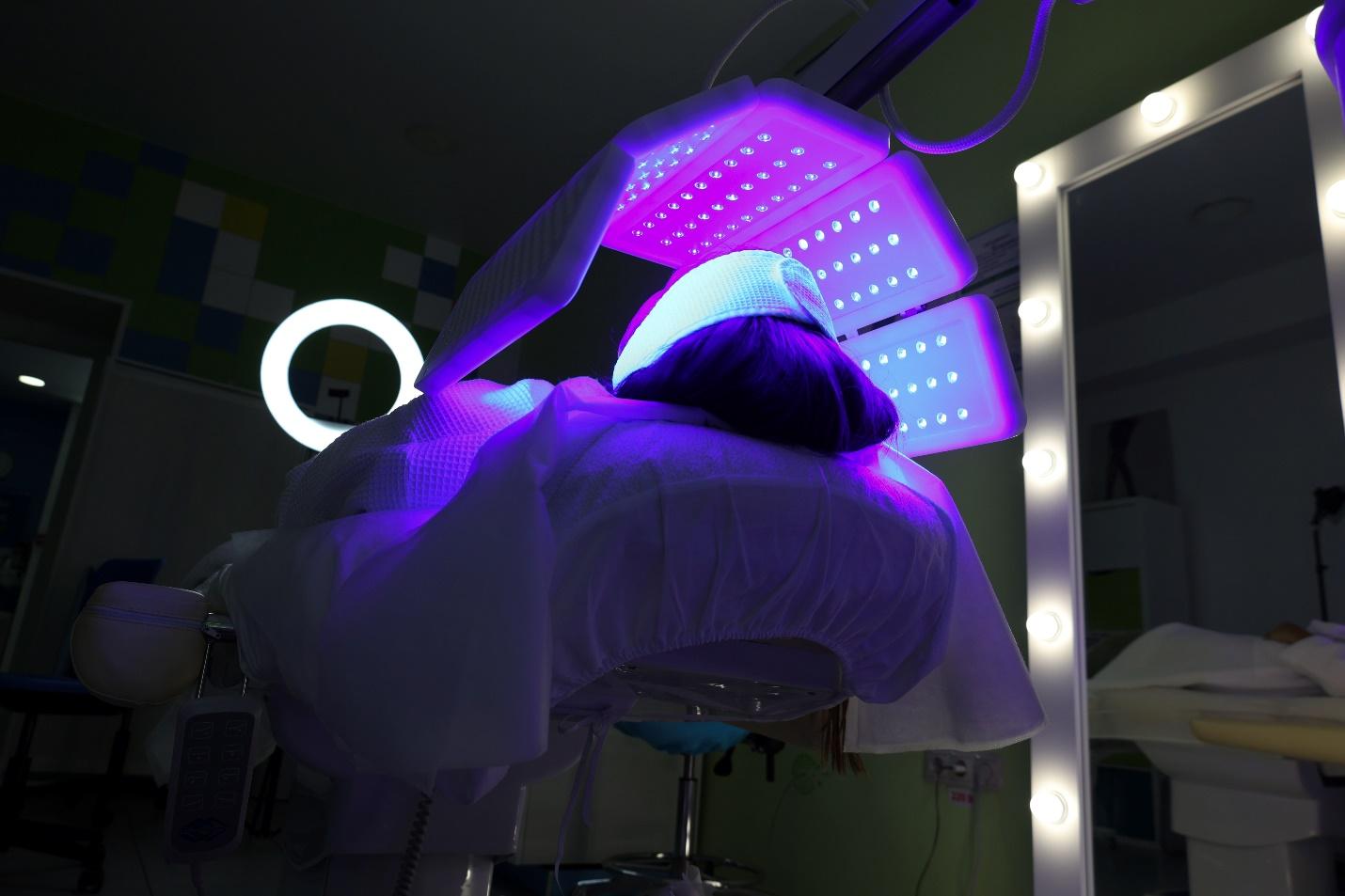
Treatment begins with an assessment of your procedure, stage of healing and recovery goals. The wavelength, treatment duration and protocol are selected according to the condition being treated and whether LED therapy is being incorporated into your post-procedure recovery plan or used as a standalone treatment.
Before treatment
The consultation focuses on understanding your skin condition and determining whether LED therapy is appropriate.
- Review of medical history – relevant medical conditions, medications, previous treatments and factors that may affect skin healing or treatment suitability are reviewed.
- Assessment of skin condition – the treatment area is examined to evaluate skin quality, inflammation, healing status or other concerns that may benefit from LED therapy.
- Discussion of treatment objectives – your goals are discussed to determine whether treatment is intended for skin rejuvenation, wound healing, recovery support or scar management.
- Determination of appropriate wavelengths – different wavelengths produce different biological effects. The most appropriate treatment protocol is selected based on your individual needs.
- Fitzpatrick Skin Type 1–6 : In patients with higher Fitzpatrick skin types i.e. 4–6, there is a higher chance of heat-inducing pigmentation issues, and treatment power and duration may have to be adjusted.
- Explanation of expected outcomes – the likely benefits, limitations, treatment schedule and expected timeline for improvement are discussed before treatment begins.
During treatment
The treatment itself is straightforward and typically well tolerated.
- Skin preparation – the treatment area is cleansed to remove makeup, skincare products or surface impurities.
- Positioning of the LED device – the LED panel is positioned at a suitable distance from the treatment area to ensure even light delivery.
- Protective measures – protective eyewear will be provided depending on the treatment area and device being used.
- Light delivery – the selected wavelengths are delivered to the skin for approximately 10–20 minutes while you remain comfortably seated or lying down.
- Monitoring during treatment – the treatment is monitored to ensure comfort throughout the session.
- Completion of treatment – once the session is complete, patients can usually return to their normal daily activities immediately.
What should I expect after LED light therapy?
Most patients experience no downtime after treatment and can resume normal activities immediately.
Following treatment, you may notice:
- Mild temporary warmth
- Slight redness in sensitive individuals
- A refreshed or calmer skin appearance
- Less pain and more comfort in treated area.
- Progressive improvement with repeated treatments
Because LED therapy works by supporting biological processes within the skin, improvements often develop gradually rather than immediately.
What results can I expect after LED light therapy?
The timeline for visible improvement varies according to the condition being treated and the number of sessions performed. Patients may notice:
Early changes (days to weeks)
- Reduced redness
- Calmer skin appearance
- Improved comfort during recovery
Intermediate changes (weeks)
- Progressive improvement in skin texture
- Better healing response
- Reduction in visible inflammation
Longer-term changes (months)
- Ongoing collagen production
- Improvement in overall skin quality
- Enhanced skin rejuvenation outcomes
Results are influenced by factors such as age, skin condition, overall health, treatment frequency and adherence to aftercare recommendations.
LED light therapy aftercare
Although LED light therapy has minimal to no downtime, appropriate aftercare will still be advised to support healing and optimise treatment outcomes.
Do
- Follow any skincare instructions provided
- Stay adequately hydrated
- Use sunscreen consistently
- Maintain a healthy skincare routine
- Attend recommended follow-up sessions
- Continue other prescribed recovery treatments
Avoid
- Excessive sun exposure immediately after treatment
- Aggressive exfoliation if advised against
- Picking at healing skin
- Discontinuing recommended recovery treatments prematurely
Can LED light therapy be combined with other treatments?
LED light therapy is frequently incorporated into broader treatment plans because it is gentle, non-invasive and compatible with many surgical and non-surgical procedures.
Depending on the treatment goals, LED therapy may be combined with the following:
Manual Lymphatic Drainage (MLD)
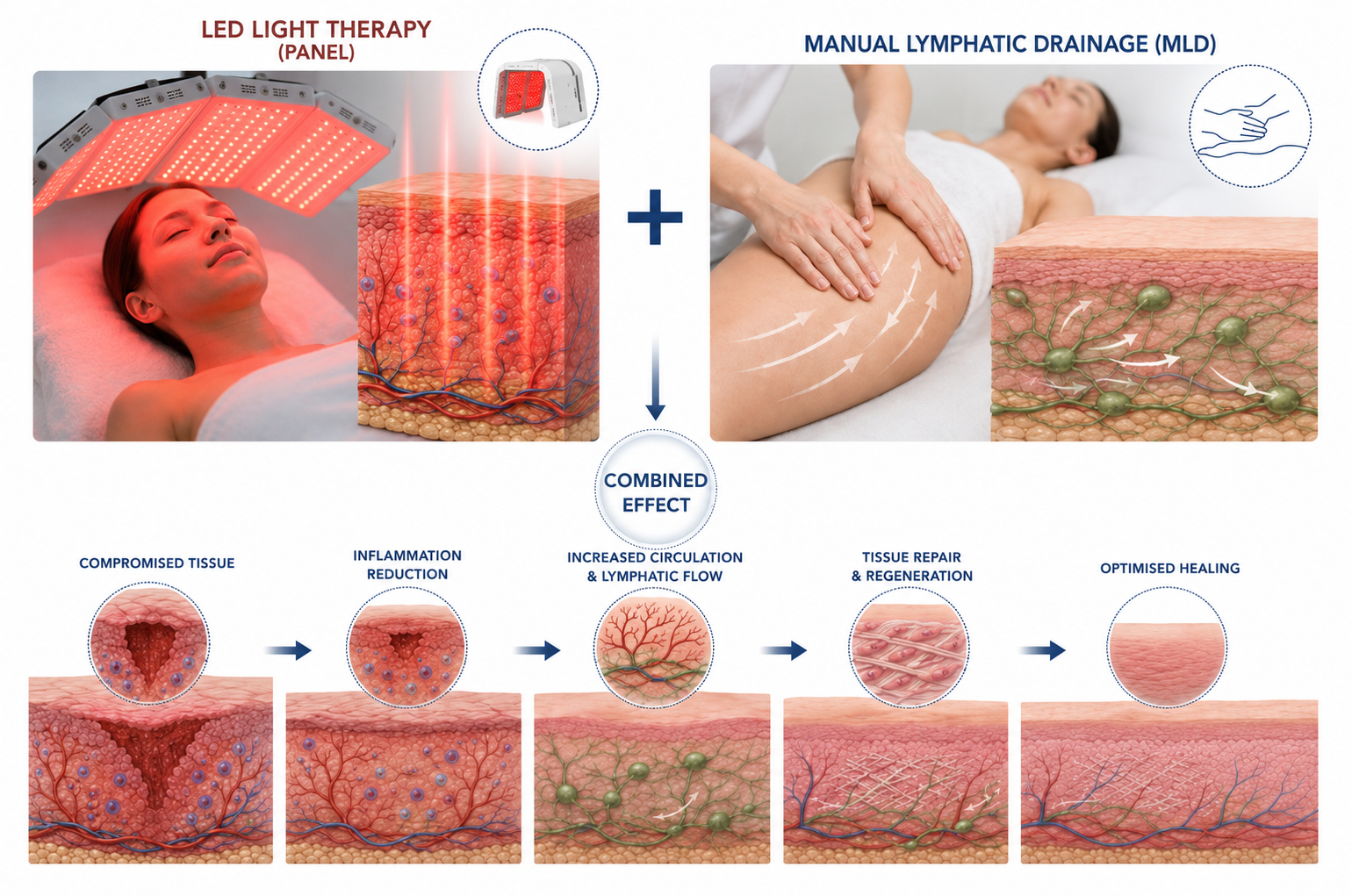
LED light therapy and manual lymphatic drainage massage (MLD) are commonly combined during recovery after surgery.
While LED therapy supports cellular repair and recovery, MLD helps encourage lymphatic drainage and reduce fluid retention.
Combined this way, they will help:
- Support healing
- Reduce swelling
- Improve patient comfort and well-being
- Optimise recovery progression
Laser and energy-based treatments
Dr Pearlie always combines LED therapy with:
- CO2 laser resurfacing – after CO2 laser resurfacing, high grade medical serum will be immediately applied to your skin following up with LED light therapy to maximize absorption of serum into the skin. Light therapy also helps with reducing inflammation thereby supporting early recovery.
- Morpheus8 radiofrequency microneedling – after RF microneedling, high grade medical serum will be immediately applied to your skin following up with LED light therapy to maximize absorption of serum into the skin. Light therapy also helps with reducing inflammation thereby supporting early recovery.
Surgical procedures
LED therapy is usually recommended as part of recovery following selected procedures, such as:
- Facelift
- Rhinoplasty
- Breast augmentation
- Liposuction
- Abdominoplasty
- All body contouring procedures/surgeries
What is the difference between LED light therapy and laser treatments?
Many patients assume LED light therapy and laser treatments work in similar ways. While both use light energy, their mechanisms and treatment goals differ significantly.
FEATURE | LED LIGHT THERAPY | LASER TREATMENTS |
Energy source | Low-level, non-coherent (diffuse) light. While it is set to a dominant wavelength (e.g., a “Red Light 660nm”) it always includes a small range of wavelengths around that peak. | High-energy, coherent beam at one exact wavelength targeting a chromophore. |
Tissue injury | No intentional tissue injury | Creates controlled tissue injury |
Heat generation | Minimal | Variable depending on laser type, but usually generates significant heat energy, |
Downtime | Minimal to none | Often requires downtime |
Primary goal | Support healing, recovery and cellular activity | Resurfacing, pigmentation correction, scar treatment and skin remodelling |
Comfort level | Generally comfortable | Varies depending on treatment intensity |
Recovery use | Commonly used during recovery | Often, the treatment that recovery follows |
How many LED light therapy sessions do I need?
The number of sessions required varies according to the condition being treated, the severity of the concern and the desired treatment goals. In the acute phase of healing, sessions may be spaced closely together and performed either daily or every alternate day. In the post-acute phase, sessions may be spaced further apart.
For post-procedure recovery, several sessions may be recommended during the healing phase to support tissue repair and reduce inflammation. For skin rejuvenation concerns, treatment is often performed as a series of sessions spaced over several weeks to achieve cumulative benefits.
Because the biological effects of LED therapy develop progressively, multiple sessions generally produce more noticeable results than a single treatment. Some patients also choose periodic maintenance sessions to help support long-term skin health and rejuvenation.
The most appropriate treatment schedule will be determined based on your skin condition, recovery needs and overall treatment plan.
Why is medical assessment important before LED light therapy?
Before recommending LED Light Therapy, Dr Pearlie Tan assesses your procedure, stage of healing and treatment goals to determine whether LED therapy is appropriate and how it can be incorporated into your personalised recovery plan.
How much does LED light therapy cost in Singapore?
The cost of LED light therapy varies depending on several factors, including the treatment indication, the number of sessions required and whether the treatment is performed as a standalone service or as part of a broader recovery programme.
Whether LED Light Therapy is recommended as a standalone treatment or as part of a personalised post-procedure recovery programme may influence the overall treatment plan and cost.
At Pearl Plastic Surgery, LED light therapy typically starts from $300 per session, with bundle prices available if many sessions will be helpful to you.
Book an appointment
Recovery continues well beyond the day of surgery or procedure. Supporting the healing process with appropriate post-procedure care can play an important role in optimising recovery and overall treatment outcomes.
If you are recovering from a procedure, Dr Pearlie Tan can assess your stage of healing and advise whether LED Light Therapy may be beneficial as part of your personalised recovery plan.
Book an appointment to learn whether LED Light Therapy is appropriate for your recovery and how it may be incorporated into your post-procedure care.
Surgery Creates the Shape, Healing Reveals It
Frequently Asked Questions
Is LED light therapy safe?
Yes, LED light therapy has a strong safety profile and is widely used in both medical and aesthetic settings. Unlike many energy-based treatments, LED therapy does not rely on tissue destruction or significant heat generation to achieve its effects. As a result, the risk of complications is low.
Does LED light therapy hurt?
No, LED light therapy is painless. Most patients experience only a mild sensation of warmth during treatment.
Is red light therapy the same as LED light therapy?
Red light therapy is a type of LED light therapy that uses red wavelengths, while LED therapy may also include blue, yellow and near-infrared wavelengths.
How long does an LED light therapy session take?
Most sessions take approximately 15 to 30 minutes, although treatment duration may vary depending on the condition being treated.
Is there any downtime after LED light therapy?
There is minimal to no downtime. Most patients return to normal activities immediately after treatment.
How soon will I see results from LED light therapy?
Some patients notice reduced redness or improved skin comfort very early within days. Skin rejuvenation and collagen-related improvements typically develop gradually over multiple sessions.
Can LED light therapy help with wound healing?
Yes, LED light therapy can support the body’s natural healing processes by encouraging cellular activity involved in tissue repair and recovery. Light therapy can be utilised as part of wound management in some burn wounds, acute and chronic wounds.
Can LED light therapy help support recovery from swelling?
In selected situations, LED light therapy may help reduce inflammation and support recovery, particularly when incorporated into a broader post-procedure treatment plan.
Can LED light therapy help after surgery?
Yes, LED light therapy is often used as part of post-procedure recovery programmes to support healing and tissue recovery after selected surgical and aesthetic procedures.
Is LED light therapy suitable for all skin types?
LED light therapy is generally suitable for most skin types because it does not rely on skin injury or significant heat generation. That said, in patients with tanned skin (Fitzpatrick skin type 4–6), some modification of power, intensity and duration may be needed to decrease risk of pigmentation issues.
Who is suitable for LED light therapy?
You may be a suitable candidate if you:
- Want a non-invasive treatment with minimal downtime
- Are recovering from an aesthetic or surgical procedure
- Have redness or inflammation affecting the skin
- Want to optimise wound healing and tissue recovery
- Are concerned about early signs of skin ageing
- Have acne-prone skin
- Are looking for a complementary treatment alongside other procedures
Who should not undergo LED light therapy?
LED light therapy is generally suitable for most individuals. However, additional assessment may be required if you:
- Have a known light-sensitive medical condition
- Take medications that increase photosensitivity
- Have active skin infections requiring alternative treatment
- Have a history of seizures triggered by flashing lights
- Are undergoing treatment for certain eye conditions
Can LED light therapy treat acne?
Blue light wavelength is very effective and useful in treating and managing acne-prone skin and can help eradicate acne-causing bacteria.
Does LED light therapy stimulate collagen production?
Certain wavelengths, particularly red light, can help stimulate biological processes involved in collagen production and skin repair.
Can LED light therapy be performed during recovery from laser treatment?
Yes, LED light therapy is sometimes used after certain laser procedures to support healing, reduce inflammation and optimise recovery.
How long do LED light therapy results last?
Results vary depending on the condition being treated, lifestyle factors and skin health. Maintenance treatments may be recommended to support ongoing benefits.